 Skip to content

Attribution is the foundation of effective marketing decisions. It explains which touchpoints drive conversions and how each interaction contributes to the pipeline and revenue.
For B2B marketers, this is critical. Long sales cycles, multiple stakeholders, and multi-channel journeys make it difficult to identify what truly drives results.
Many organisations still rely on outdated approaches. The most common is last-click attribution, which assigns full credit to the final interaction. While simple, it fails to reflect how modern B2B buying journeys actually work.
The purpose of this blog is to explore advanced attribution models, models that provide a more accurate understanding of what’s actually working in your marketing.
The Direct Answer: Why Advanced Models Matter
Advanced attribution models provide a complete view of the customer journey.
Instead of crediting a single action, they evaluate every meaningful interaction across channels and stages. This gives marketers a more accurate understanding of marketing attribution and how each touchpoint contributes to conversion.
In B2B, where buyers engage with content, ads, and sales teams over time, this level of visibility is essential. Without it, budget decisions are based on incomplete data.
What Is an Attribution Model?
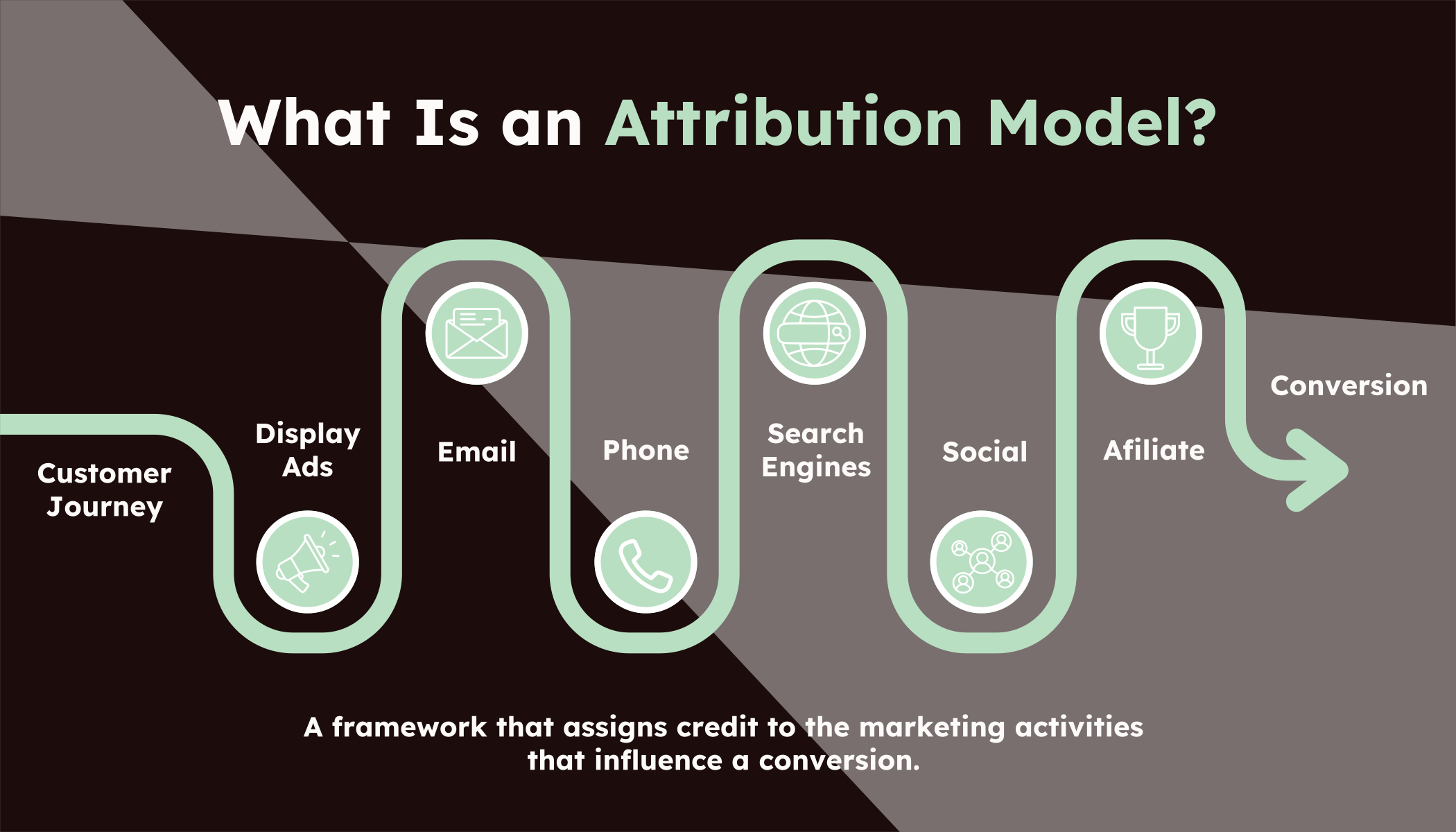
A marketing attribution model is a framework that assigns credit to the marketing activities that influence a conversion.
If you are asking what attribution in marketing is, it is simply the process of identifying which efforts drive results. A model defines how that credit is distributed.
This directly impacts:
- Budget allocation
- ROI measurement
- Channel prioritisation
- Performance optimisation
- Strategic planning
In short, your approach to attribution in marketing determines where you invest and how you measure success.
Types of Attribution Models
Before exploring advanced approaches, it is important to understand the common types of attribution used as a starting point.
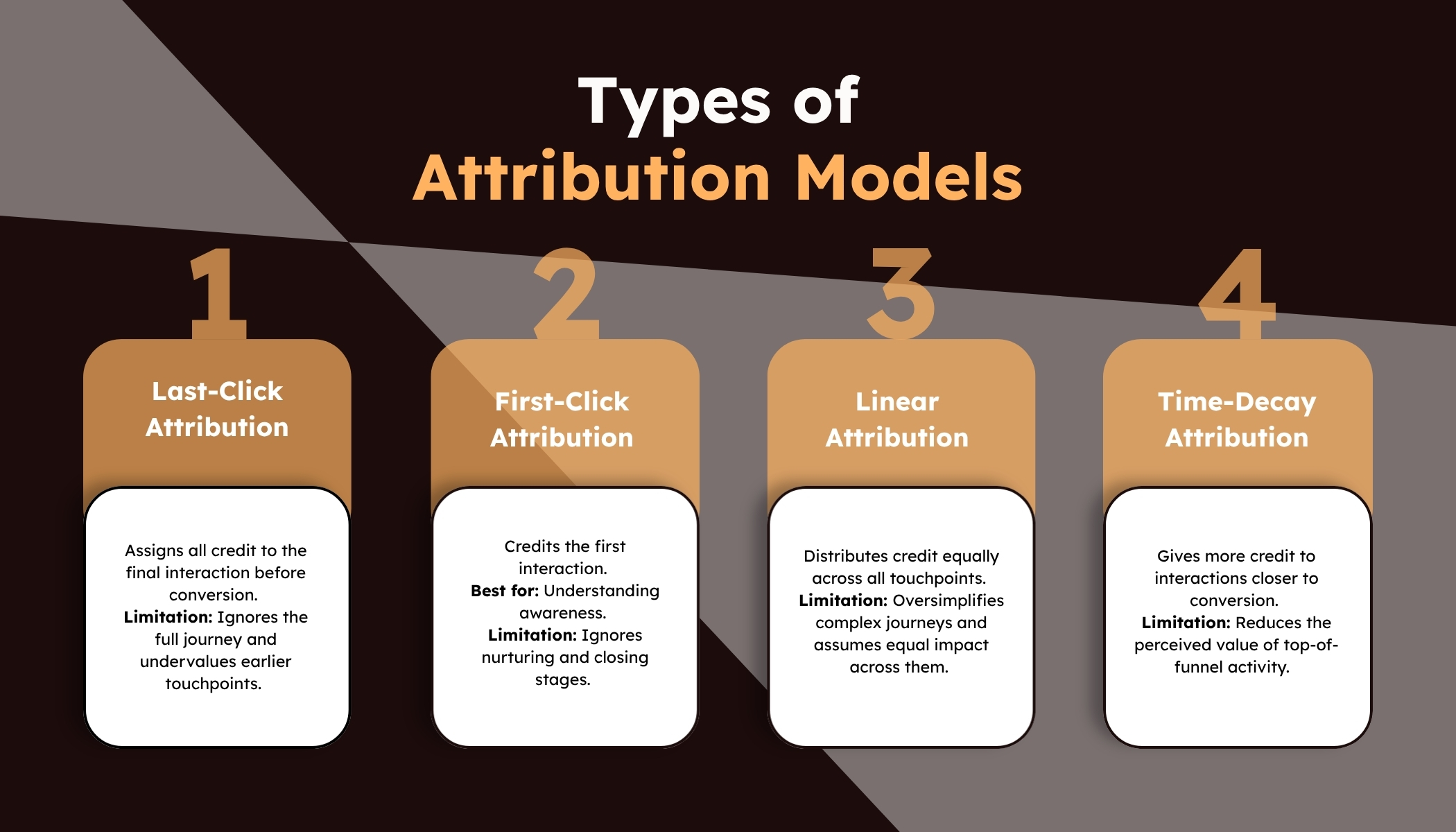
1. Last‑Click Attribution (Traditional, but flawed)
Assigns all credit to the final interaction before conversion.
Limitation: Ignores the full journey and undervalues earlier touchpoints.
2. First‑Click Attribution
Credits the first interaction.
Best for: Understanding awareness.
Limitation: Ignores nurturing and closing stages.
3. Linear Attribution
Distributes credit equally across all touchpoints.
Limitation: Oversimplifies complex journeys and assumes equal impact across them.
4. Time‑Decay Attribution
Gives more credit to interactions closer to conversion.
Limitation: Reduces the perceived value of top-of-funnel activity.
These models provide a basic framework, but they struggle to reflect the complexity of B2B buying behaviour.
Advanced Attribution Models Explained
Modern B2B marketing requires more accurate and adaptable approaches. This is where advanced attribution models deliver real value.
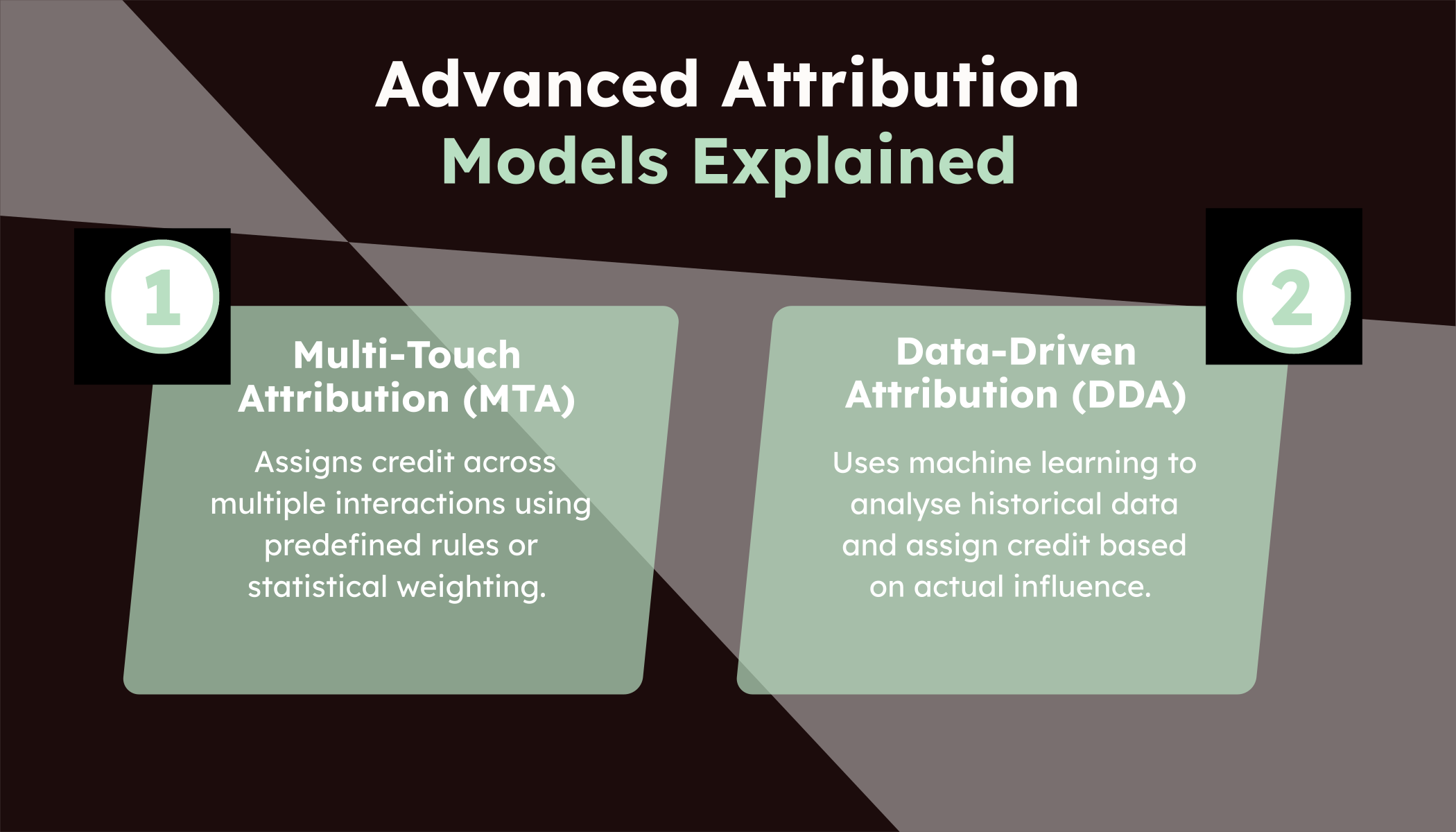
1. Multi‑Touch Attribution (MTA)
How it works:
Multi-touch attribution assigns credit across multiple interactions using predefined rules or statistical weighting.
Best suited for:
- Long sales cycles
- Multi-channel strategies
- Multi-stakeholder decision processes
Why it matters:
MTA reveals how awareness, consideration, and conversion efforts work together. It highlights the contribution of each stage in the funnel and exposes insights that basic models miss.
2. Data‑Driven Attribution (DDA)
How it works:
Data-driven attribution uses machine learning to analyse historical data and assign credit based on actual influence.
Best suited for:
- Organisations with strong data infrastructure
- Teams using CRM and analytics platforms
- Marketers focused on precision and scalability
Key benefits:
- Continuous optimisation based on real data
- More accurate performance measurement
- Improved digital marketing ROI
- Smarter budget allocation
Data-driven models represent the most advanced form of marketing attribution models, adapting as new data becomes available.
How These Models Improve Budget Decisions
The true value of advanced attribution models lies in how they improve decision-making.
With a clearer view of the customer journey, marketers can:
- Identify which channels influence conversions
- Recognise undervalued touchpoints
- Reduce wasted spend
- Improve customer acquisition costs
- Align marketing and sales around shared data
Example Scenario
A B2B company relying on last-click attribution believes:
- Google Ads = 70% of conversions
- Email = 20%
- Social = 8%
- Content = 2%
But after implementing multi-touch attribution, the truth emerges:
- Instagram = 35% influence
- Blog content = 25%
- Email nurturing = 22%
- Google Ads = 18%
This data shows that upper and mid‑funnel channels were doing most of the heavy lifting, but last-click hid their value.
Advanced attribution reveals this impact, allowing for more effective paid media budget planning and stronger performance outcomes.
A Smarter Path Forward for B2B Marketers
B2B marketing is too complex for oversimplified measurement.
Relying on outdated models leads to misallocated budgets, missed opportunities, and inaccurate reporting.
By adopting advanced attribution models, businesses gain:
- A clearer view of the full customer journey
- More accurate return on marketing investment
- Better channel and content decisions
- Increased efficiency across campaigns
- More predictable pipeline growth
The shift is clear.
Understanding what an attribution model is is only the starting point. The real advantage comes from choosing the right model and applying it consistently across your marketing ecosystem.
Measure What Matters, Then Scale It
Growth in B2B marketing depends on clarity.
When you understand which efforts drive results, you can invest with confidence, optimise faster, and scale what works.
Advanced attribution models provide that clarity.
They replace assumptions with insight, align teams around real data, and turn your marketing attribution model into a competitive advantage.