 Skip to content

The modern workplace is evolving faster than ever. Artificial intelligence is reshaping how businesses operate; remote and hybrid models have changed collaboration; and client expectations continue to shift as markets become more competitive. Traditional approaches built around rigid processes and long-term predictability are no longer enough. Success increasingly depends on how quickly people and organisations can respond to change.
This is why workplace agility has become a critical business capability. Agility is no longer limited to project management. It is a way of thinking that enables people to adapt, learn, and move forward with confidence.
An agile mindset can become:
- A cultural advantage
- A competitive advantage
- A driver of sustainable growth
Organisations that build adaptability into their culture are better positioned to navigate uncertainty, recognise opportunities, and create future-ready teams.
What Is an Agile Mindset?
An agile mindset is a way of thinking that embraces adaptability, continuous learning, collaboration, and responsiveness to change.
At its core, agility prioritises progress over perfection. Instead of waiting for complete certainty, agile teams take informed action, learn from outcomes, and adjust when circumstances change.
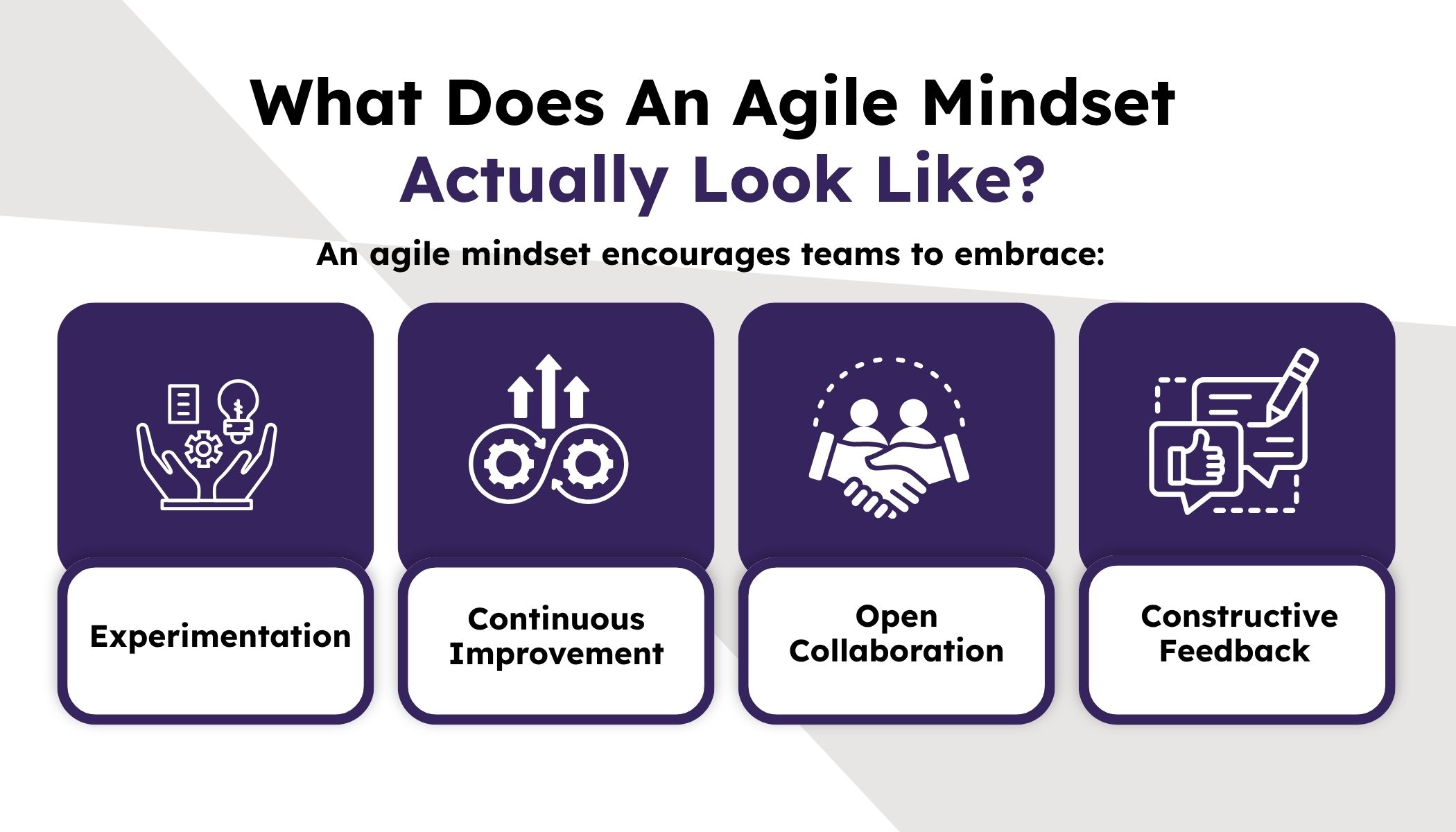
This encourages:
- Experimentation
- Continuous improvement
- Open collaboration
- Constructive feedback
Challenges become opportunities to learn rather than barriers to progress. This builds resilience, encourages innovation, and enables teams to keep moving forward as conditions evolve.
Why Adaptability Is Becoming a Critical Business Skill
Technology, consumer behaviour, and competitive landscapes are constantly changing. Businesses that cannot adapt to these changes risk losing their relevance in their industry.
Employees increasingly need to respond to market changes, act on client feedback, learn new technologies, and develop new capabilities.
This makes the ability to learn just as important as existing expertise. A highly skilled employee who relies solely on what worked before may struggle as their role evolves. Someone who remains curious and willing to learn can continue creating value even when circumstances change.
Strong workplace agility gives organisations the ability to respond rather than react. The businesses best prepared for the future are not necessarily those with the most resources. They are often those that can learn and adapt the fastest.
Moving from Fixed Thinking to an Agile Growth Mindset
Traditional thinking often prioritises certainty, predictability, and avoiding mistakes. While these qualities have value, an excessive focus on getting everything right can limit innovation. An agile growth mindset takes a different approach.
Instead of fearing uncertainty, teams recognise that progress often requires experimentation. Successes provide direction, while setbacks provide information that can improve the next decision.
A strong growth mindset at work encourages people to:
- Test new ideas
- Learn from outcomes
- Seek constructive feedback
- Continuously improve
- Embrace change
Mistakes become learning opportunities rather than reasons to stop trying. This shift creates teams that are more confident in navigating uncertainty, more willing to challenge assumptions, and better prepared to find solutions when circumstances change.
In an agile workplace, the goal is not to have every answer from the beginning. It is to build teams capable of learning, adjusting, and finding the best path forward.
What Agile Teams Do Differently
Agile teams do more than respond to change. They build adaptability into how they work every day.
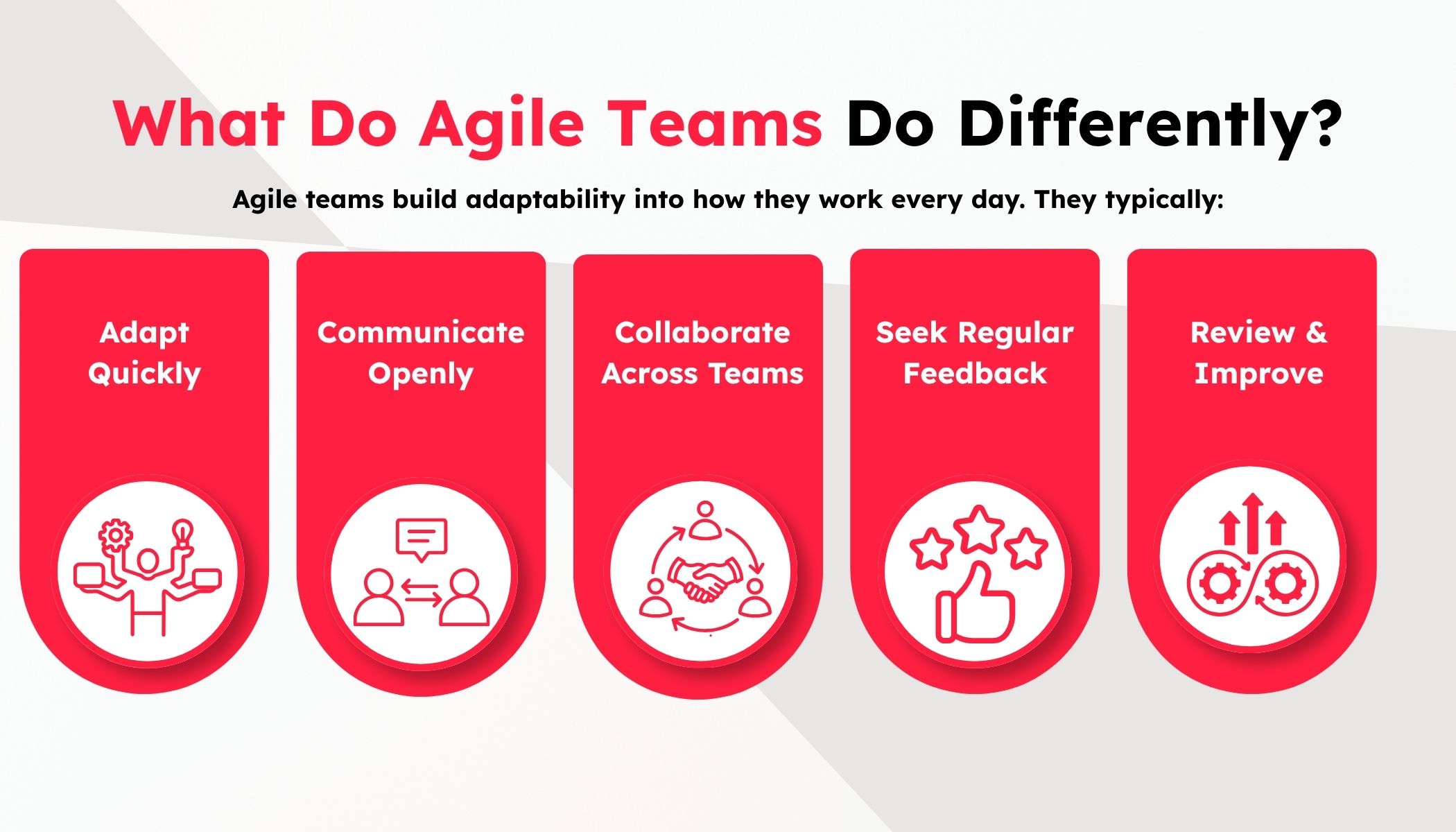
They typically:
- Adapt quickly to new information
- Communicate openly
- Collaborate across teams
- Seek feedback regularly
- Review and improve continuously
Most importantly, agile teams recognise that today’s solution may not be tomorrow’s solution. They are willing to challenge assumptions, adjust priorities, and change direction when new information reveals a better path.
This agile mindset supports faster execution, stronger problem-solving, and more effective collaboration. Rather than becoming attached to a particular process, teams stay focused on achieving the best outcome.
How Continuous Learning Supports Future-Ready Teams
Continuous learning is essential for building future-ready teams. Professional development is no longer limited to formal qualifications or occasional training. In a fast-changing workplace, employees need opportunities to develop new skills, explore emerging technologies, and share knowledge continuously.
Learning can take many forms, including:
- Self-development
- Mentoring
- Peer learning
- Internal workshops
- Knowledge-sharing sessions
A strong growth mindset at work makes learning part of everyday performance rather than a separate activity. When employees remain curious and willing to develop their capabilities, organisations become better equipped to respond to change, adopt new technologies, and identify growth opportunities.
Why Resilience and Agility Go Hand in Hand
Change brings uncertainty. Markets shift, client expectations evolve, technology disrupts established processes, and unexpected challenges arise. Resilient teams can recover from setbacks, stay focused, and find solutions under pressure.
An agile growth mindset strengthens that resilience by changing how teams respond to disruption.
Instead of viewing change as a threat, they see it as an opportunity to learn, improve, and find a stronger way forward.
Resilience helps teams withstand change. Agility helps them benefit from it. Together, they create adaptable teams that can maintain momentum even when conditions are uncertain.
The Role of Leadership in Creating Agile Cultures
An agile workplace does not develop by accident. Leaders create the conditions that allow agility to thrive.
They can encourage workplace agility by:
- Supporting experimentation
- Promoting continuous learning
- Encouraging open communication
- Empowering employees to make decisions
Psychological safety is equally important. Employees need to feel confident sharing ideas, raising concerns, asking questions, and testing new approaches without unnecessary fear of failure.
Strong leaders build cultures around trust, accountability, curiosity, and collaboration. Instead of controlling every decision, they give teams the context and confidence to solve problems and take ownership. This creates an environment where learning and performance reinforce each other.
How Agile Mindsets Improve Team Performance
Agility delivers more than cultural benefits. It can strengthen business performance. Teams with a strong agile mindset are better equipped to make decisions quickly, collaborate effectively, innovate, and take accountability for results.
When employees are empowered to learn and adapt, problems can be addressed sooner and new ideas explored with greater confidence.
Over time, this creates a powerful cycle. Learning improves performance, performance generates new insights, and those insights drive further improvement.
For organisations navigating constant change, workplace agility is no longer simply a desirable cultural trait. It is a strategic capability that helps teams remain productive, resilient, and ready for what comes next.
How Ruby Digital Builds Future-Ready Teams
At Ruby Digital, agility extends beyond processes and project management. It is part of a culture that encourages people to learn, adapt, and take ownership of their growth.
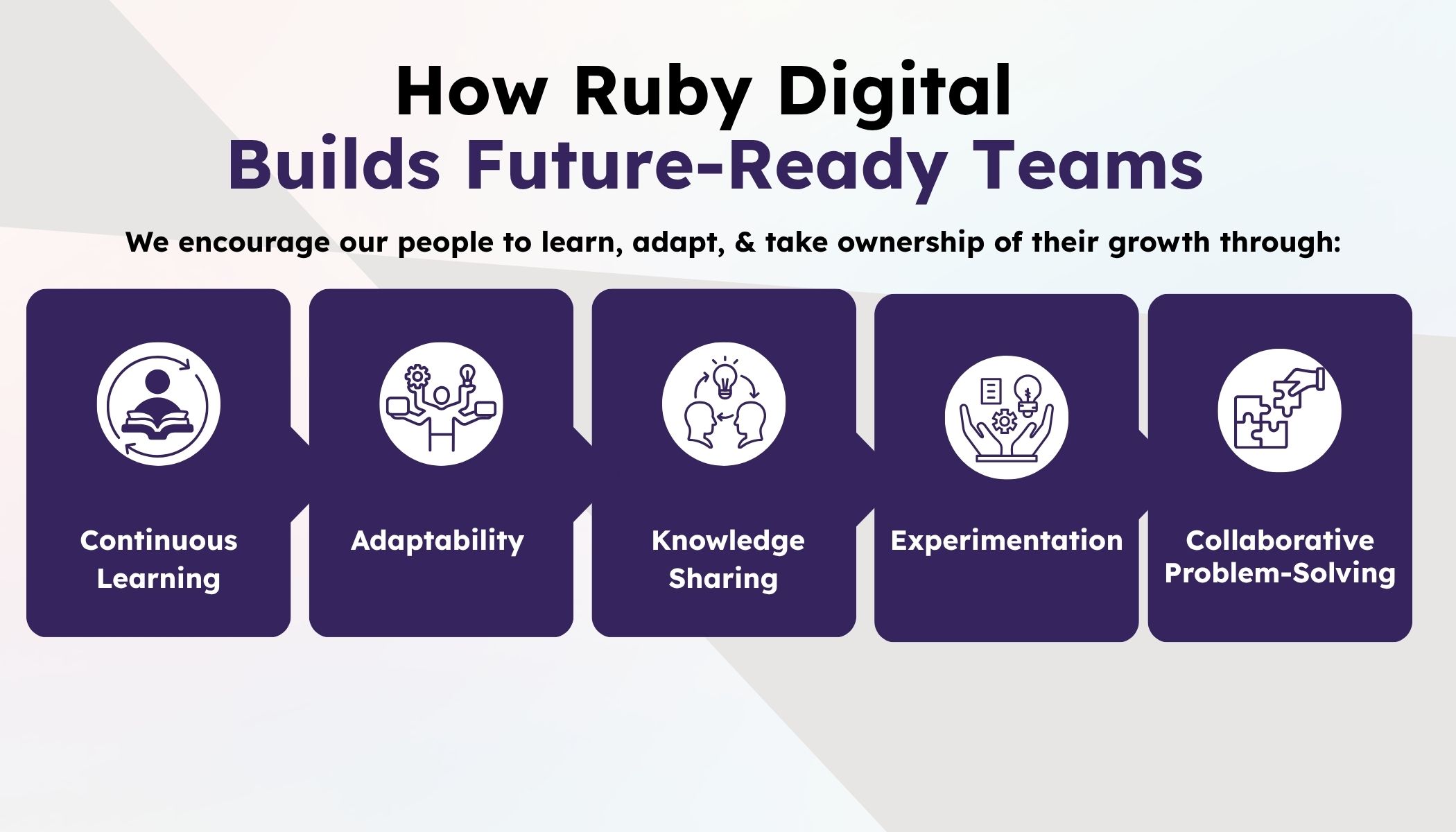
The team embraces:
- Continuous learning
- Adaptability
- Knowledge sharing
- Experimentation
- Collaborative problem-solving
Employees are encouraged to challenge assumptions, explore new ideas, and learn from both successes and setbacks. This creates an agile workplace where development is ongoing, and people are equipped to respond confidently as technology and client needs evolve.
By supporting an agile growth mindset, Ruby Digital helps team members expand their capabilities while strengthening the organisation as a whole.
This people-first approach creates future-ready teams that are prepared to solve today’s challenges while developing the skills needed for tomorrow. Read our “How Asynchronous Work Creates Productivity and Freedom” blog for more insight.
The Future of Work Belongs to Adaptable Organisations
There is little reason to expect the pace of change to slow. Artificial intelligence will continue to evolve, automation will reshape industries, client expectations will shift, and new business models will emerge.
Organisations that remain rigid will find it increasingly difficult to compete. Those that strengthen workplace agility will be better equipped to respond to disruption, identify opportunities, and maintain momentum.
Building adaptability means creating a culture where employees are encouraged to:
- Keep learning
- Remain curious
- Respond constructively to change
- Challenge outdated assumptions
- Improve how work gets done
A strong growth mindset at work gives people the confidence to develop alongside the organisation rather than resist change. The businesses best positioned for the future will not simply react faster.
They will build teams capable of recognising change, learning from it, and turning it into an opportunity for growth.
Agility Is a Mindset, Not a Methodology
Agility is often associated with frameworks, processes, and project management techniques. These tools can be valuable, but true agility begins with how people think. An agile mindset enables individuals and teams to navigate uncertainty, embrace continuous learning, and adjust their approach when circumstances change.
Future-ready organisations:
- Encourage adaptability
- Prioritise learning
- Build resilience
- Empower people to grow
They understand that success does not require perfect plans or complete certainty. It requires people who are willing to learn, respond, and keep moving forward. An agile growth mindset transforms change from something to fear into something teams can use.
It encourages experimentation, strengthens resilience, and creates an environment where improvement becomes part of everyday work.
This is what makes workplace agility such a powerful competitive advantage. In a rapidly evolving business environment, the strongest organisations will be those that build future-ready teams capable of adapting with confidence.
Agility is not simply a way of working. It is the mindset that enables businesses and their people to remain resilient, relevant, and ready for whatever comes next.