 Skip to content

Traditional performance systems were built to measure output, not inspire it. Many businesses still rely on rigid KPIs, static dashboards, and quarterly reviews to evaluate success. While these systems may track activity, they often fail to create the momentum people need to stay engaged.
Employees may understand their targets, but the journey toward those goals can feel slow, disconnected, and uninspiring. Feedback often arrives too late. Progress can feel invisible. Wins are frequently overlooked. Even high-performing teams can lose motivation when work becomes little more than numbers on a spreadsheet.
The reality is clear: people are driven by progress, recognition, and a sense of achievement. Humans respond to visible momentum far better than delayed evaluation. This is where workplace gamification changes the game.
Rather than treating performance as something to be reviewed after the fact, gamification in the workplace turns it into an experience employees actively engage with every day. It makes progress visible, effort meaningful, and success motivating.
Why Gamification Works
Workplace gamification works because it taps into core human motivators like progress, recognition, competition, and achievement, turning performance systems into engaging frameworks that drive accountability and sustainable high performance.
Gamification does not make work less serious. It makes performance more engaging.
When employees can track progress in real time, celebrate milestones, and see how their efforts contribute to larger goals, motivation becomes far more intrinsic. Instead of pushing people through obligation alone, gamification in business creates systems people want to participate in.
Leaderboards, challenges, achievements, and shared wins are not gimmicks when designed strategically. They are powerful tools for improving gamification and productivity by making growth measurable and rewarding.
What Gamification in the Workplace Actually Means
At its core, gamification in the workplace applies game-inspired mechanics to business environments to improve motivation and performance.
This does not mean turning work into entertainment. It means using proven engagement principles to create clearer, more rewarding systems.
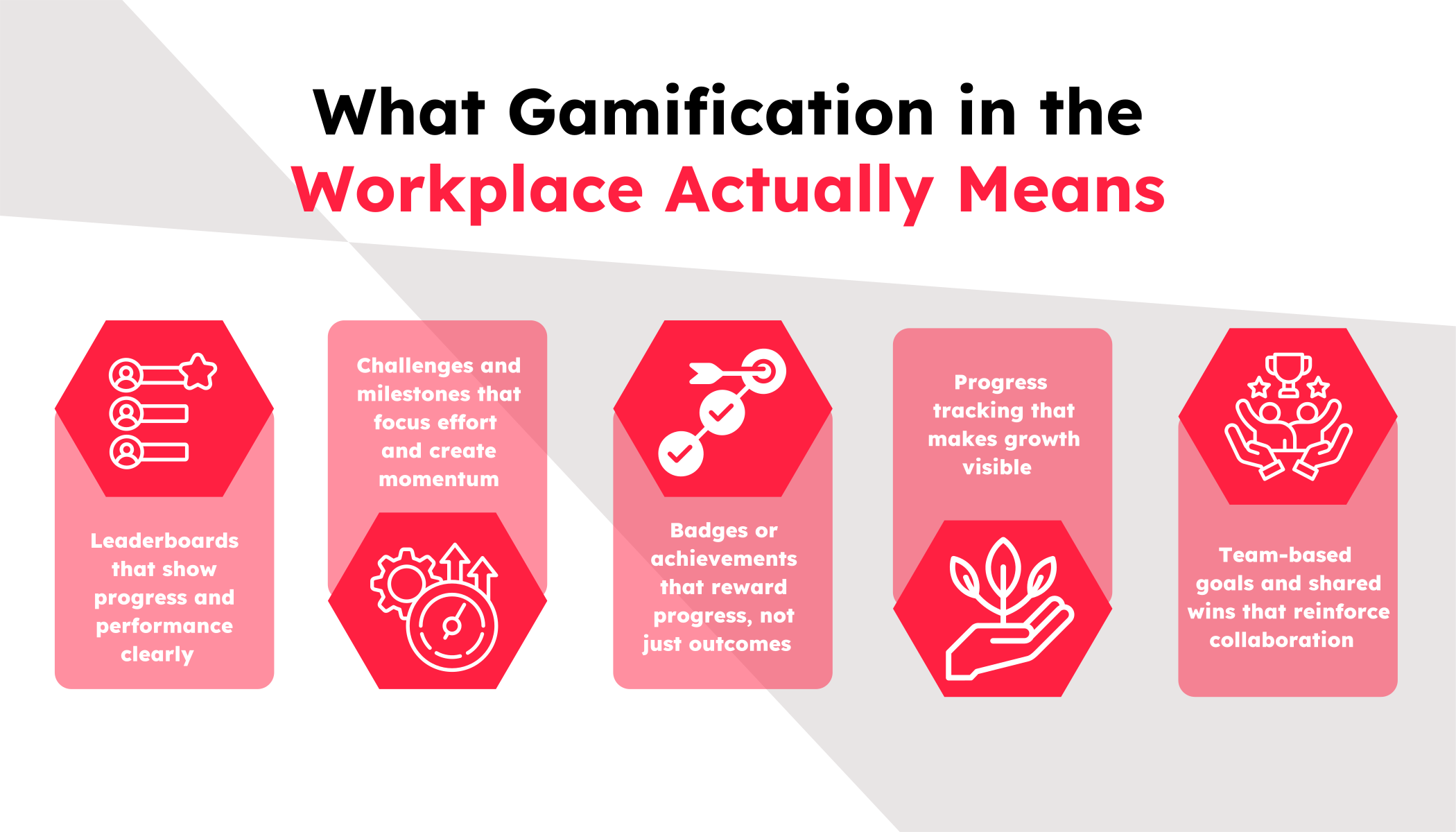
In practical terms, workplace gamification can include:
- Leaderboards that show progress and performance clearly
- Challenges and milestones that focus effort and create momentum
- Badges or achievements that reward progress, not just outcomes
- Progress tracking that makes growth visible
- Team‑based goals and shared wins that reinforce collaboration
Importantly, this is not about childish prizes or superficial rewards. Effective workplace gamification is structured, transparent, and aligned with real outcomes. It replaces ambiguity with clarity and replaces delayed feedback with immediate reinforcement.
The Psychology Behind Gamification & Motivation
To understand why gamification and productivity are so closely connected, it helps to understand how motivation works.
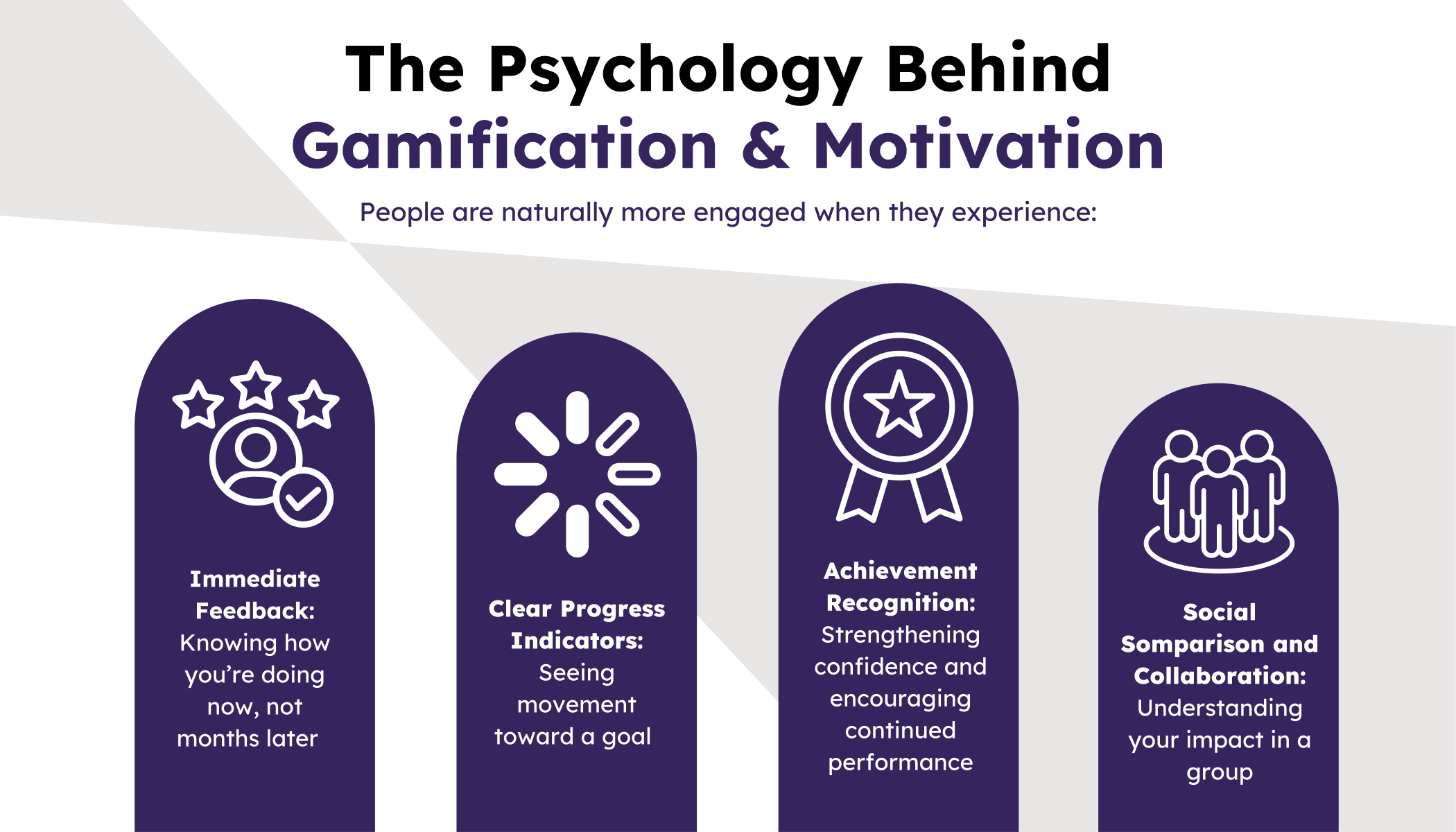
People are naturally more engaged when they experience:
- Immediate feedback: knowing how you’re doing now, not months later
- Clear progress indicators: seeing movement toward a goal
- Achievement recognition: strengthening confidence and encouraging continued performance.
- Social comparison and collaboration: understanding your impact in a group
Psychologically, progress and achievement trigger dopamine responses that reinforce behaviour. Each visible step forward increases focus, commitment, and energy. Clear goals combined with visible progress create momentum, while ambiguity and delay destroy it.
Unlike pressure‑based systems that rely on fear of failure, gamified systems align with intrinsic motivation, the desire to improve, master skills, and contribute meaningfully. This makes gamification a sustainable driver of performance motivation, rather than a short‑term push.
How Leaderboards Drive Accountability (Without Toxic Competition)
Leaderboards often get a bad reputation, usually because they’re poorly designed. When implemented thoughtfully, they don’t create pressure or unhealthy competition; they create clarity.
Leaderboards:
- Make performance visible, not hidden
- Set clear expectations around what success looks like
- Encourage self‑improvement by providing real‑time feedback
The key is fairness. Effective leaderboards are:
- Role‑specific, so comparisons are fair
- Team‑based, where possible, encouraging collaboration
- Focused on progress, not just raw output
When employees can clearly see where they stand and how they can improve, accountability becomes self-driven rather than management-driven.
Challenges & Achievements: Turning Effort into Momentum
Long‑term goals can feel overwhelming when there’s no sense of progress along the way. Gamification solves this through challenges and achievements.
- Challenges create short‑term focus and urgency
- Achievements reward effort and progress, not just final success
- Milestones break large objectives into achievable steps
This structure transforms effort into momentum.
Rather than waiting months to feel successful, employees experience regular progress markers that keep energy high. Over time, this consistency strengthens both confidence and output.
For businesses focused on gamification, this approach creates sustained engagement rather than short bursts of motivation.
The Power of Shared Wins & Team-Based Gamification
While individual motivation matters, the real power of gamification in the workplace comes from shared success.
Shared wins:
- Encourage collaboration
- Reduce siloed thinking
- Strengthen team morale
- Reinforce collective accountability
- Align individual effort with broader company goals
When teams work toward shared objectives, performance becomes more connected. Competition becomes supportive rather than divisive.
This is particularly effective in distributed or remote teams, which Ruby Digital has fully embraced.
Evidence That Gamification Improves Performance
The impact of workplace gamification is backed by consistent research and business applications.
Companies using gamified systems frequently report:
- Higher employee engagement
- Better participation in development programs
- Improved task completion rates
- Greater consistency in performance
- Increased adoption of internal tools and KPIs
Why?
Because gamification makes growth visible.
When employees can clearly see progress, rewards, and next steps, they are more likely to stay committed. It transforms performance from an abstract expectation into an active experience.
Designing Gamification That Actually Works
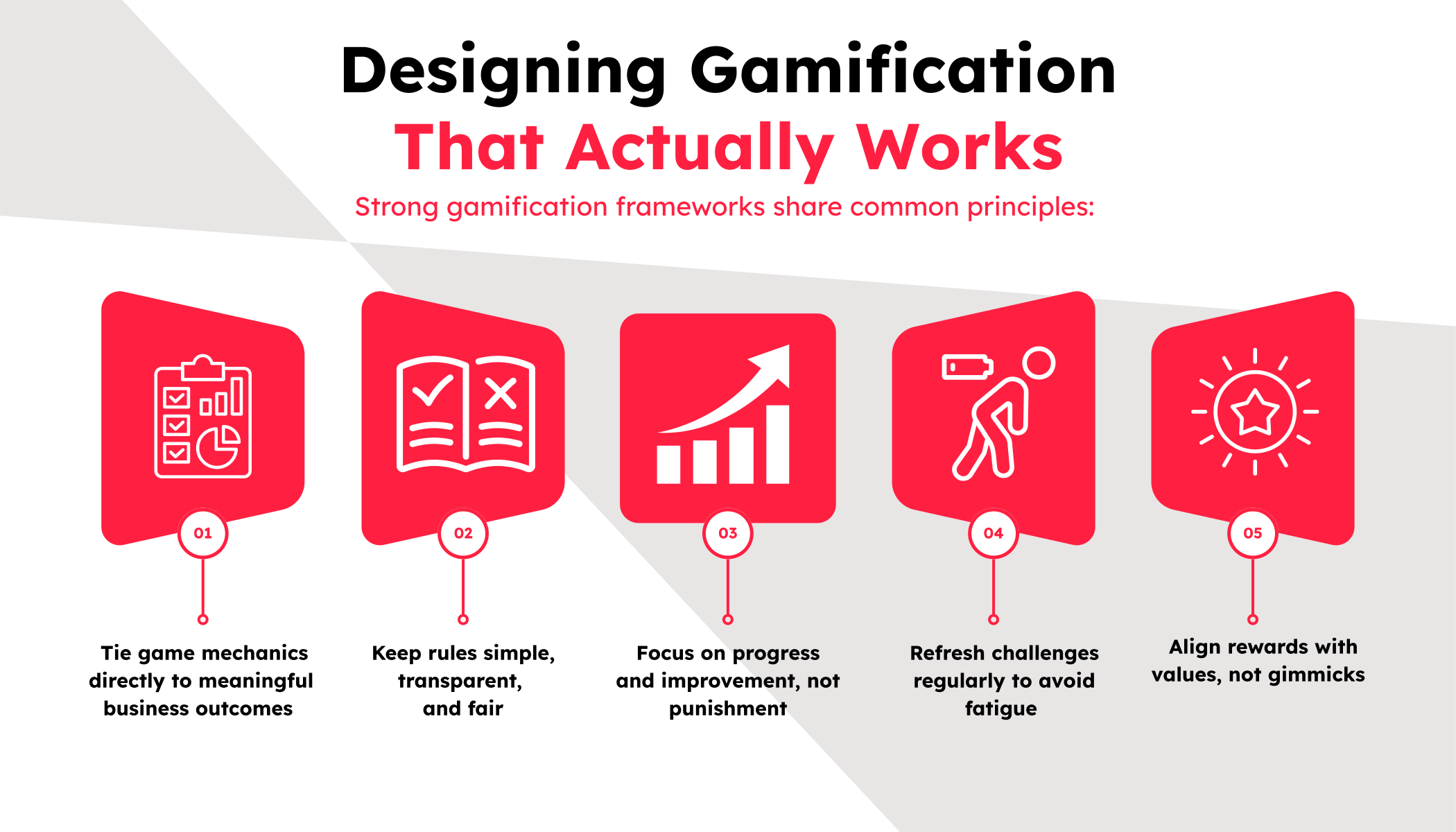
Gamification only delivers results when it’s designed with intention. Poorly executed systems can feel manipulative or exhausting. Strong gamification frameworks share common principles:
- Tie game mechanics directly to meaningful business outcomes
- Keep rules simple, transparent, and fair
- Focus on progress and improvement, not punishment
- Refresh challenges regularly to avoid fatigue
- Align rewards with values, not gimmicks
Gamification should support culture, not override it. When done right, it becomes a natural extension of how the organisation already works.
How Ruby Digital Uses Gamification
At Ruby Digital, gamification is embedded into how we grow, perform, and thrive as a team.
Step‑Up: Gamifying Career Progression
Step‑Up is Ruby Digital’s internal career progression framework designed around gamification principles. It clearly sets out:
- The goals employees need to achieve to advance
- The skills and competencies required at each level
- Defined milestones that mark progress toward the next step
Instead of vague growth conversations, Step‑Up turns development into a structured journey with visible progress. Employees always know where they stand and what’s needed to move forward, which is a key driver of motivation and fairness and a note for companies looking to improve their culture.
Strove: Gamifying health, wellbeing & impact
Strove brings gamification into wellbeing. The platform rewards physical exercise with points that employees can:
- Redeem for vouchers and rewards in the Strove shop
- Donate toward planting trees
Employees earn points by achieving exercise goals, and those who remain active unlock more opportunities to redeem or give back. This creates a positive feedback loop in which health, motivation, and environmental impact reinforce one another.
It’s a powerful example of how gamification doesn’t just improve productivity; it improves lives.
Performance Improves When Progress Feels Rewarding
The most effective performance systems do more than measure results. They inspire them.
Workplace gamification transforms static systems into dynamic experiences that make progress visible, achievement rewarding, and accountability natural.
Leaderboards create clarity. Challenges build momentum. Shared wins strengthen culture.
When employees feel recognised, motivated, and connected to progress, performance improves consistently.
The takeaway is simple: Make progress engaging, and high performance becomes far more sustainable.