 Skip to content

Being exceptional at your job can open the door to management. However, technical expertise alone does not prepare someone to lead people. New managers must suddenly delegate, give feedback, navigate difficult conversations, and make decisions that shape their team’s performance and development.
The impact managers have on workplace success is significant. According to Gallup, managers account for approximately 70% of the variance in employee engagement across teams, highlighting the important role they play in shaping employee experience, performance and workplace culture.
At Ruby Digital, we believe exceptional work starts with empowered people. As we continue building a people-centric workplace, manager development plays an important role in helping leaders and employees reach their potential.
Why High Performers Don’t Automatically Become High-Impact Managers
One of the biggest misconceptions about leadership is that high performance naturally translates into great management. In reality, the definition of success changes the moment someone moves into a leadership role.
As an individual contributor, success is often measured by personal output and expertise. Managers, however, are judged by something very different: their ability to help other people succeed. That can be a difficult adjustment, particularly for people who have built their careers on being the person with the answers.
Strong individual performance doesn’t automatically translate into effective management skills or people leadership capabilities. Many managers find themselves facing challenges they’ve never encountered before.
It’s one of the reasons why leadership development shouldn’t stop once somebody receives a promotion. In fact, Gallup estimates that organisations frequently promote people into management roles based on their previous performance rather than their leadership potential, contributing to challenges many new managers face.
At Ruby Digital, we’ve found that becoming a Team Lead or Head of Division is often the beginning of a new learning journey rather than the end of one.
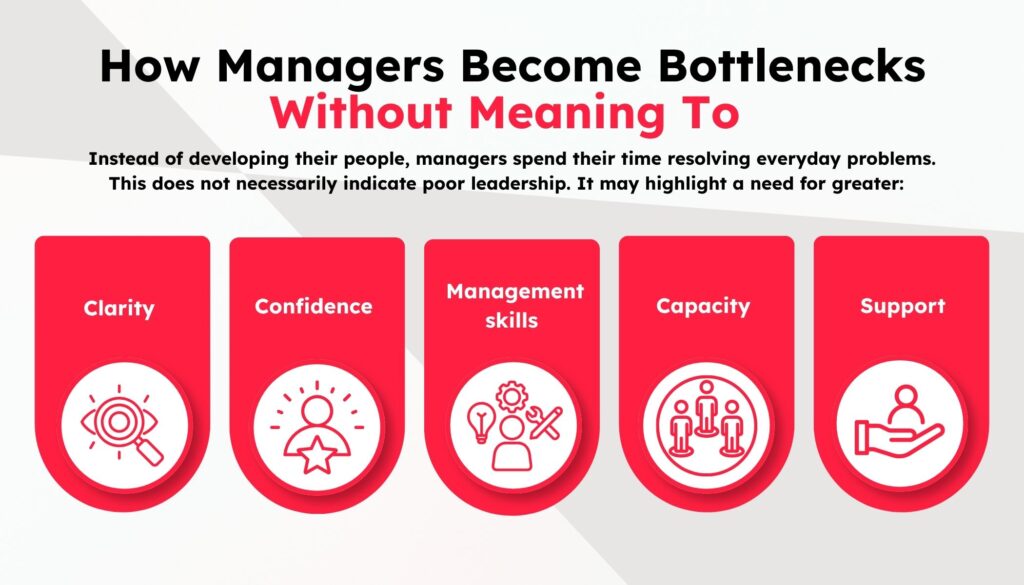
How Managers Become Bottlenecks Without Meaning To
Managers rarely intend to slow their teams down. Bottlenecks develop when employees depend on constant approvals, delegation becomes limited or difficult conversations are delayed.
Instead of developing their people, managers spend their time resolving everyday problems.
This does not necessarily indicate poor leadership. It may highlight a need for greater; clarity, confidence, management skills and capacity.
Before expecting managers to perform differently, organisations must consider whether they have created the conditions for effective leadership.
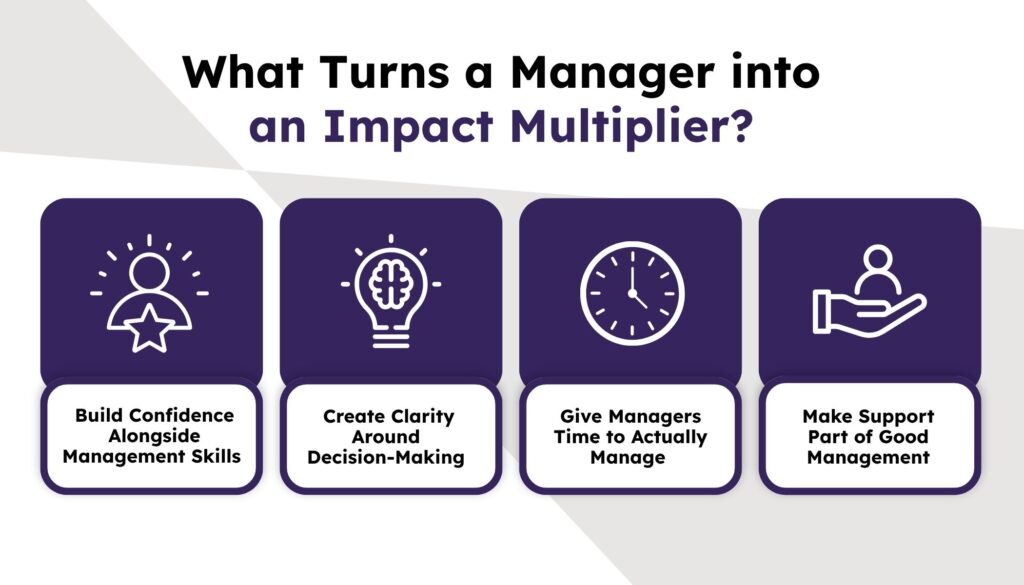
What Turns a Manager into an Impact Multiplier?
An impact multiplier empowers others to make decisions, solve problems and take ownership. Instead of becoming the centre of every process, effective managers build capability across their teams.
Their success is reflected not only in what they achieve personally, but in what they enable others to accomplish. At Ruby Digital, we’ve found that the transition from individual contributor to manager is rarely about learning a new technical skill. More often, it’s about learning how to lead people with confidence.
“In my experience, becoming a great manager isn’t about having all the answers. It’s about learning how to equip yourself with reliable information, support your team, make decisions with confidence, and help others develop. Like any skill, that takes time, practice, and the right support along the way.” – Ebert Grobler (Co-Founder & Group Chief Executive Officer)
This is why manager development should focus on more than knowledge alone. Managers need the confidence, clarity and support to put their skills into practice and create an environment where others can thrive.
What Managers Need to Succeed
While every leader’s journey is different, we’ve found there are four conditions that consistently help managers make the transition from individual contributor to confident leader more successfully.
1. Build Confidence Alongside Management Skills
Management training provides a useful foundation, but knowledge alone doesn’t build confidence.
A manager may understand how to give constructive feedback yet struggle with difficult conversations. Practical experience, mentoring, manager coaching and ongoing feedback help leaders apply their knowledge.
Effective development combines learning with opportunities to practice, reflect, and improve.
2. Create Clarity Around Decision-Making
Unclear responsibilities create unnecessary delays.
Managers need to understand which decisions they own, what they can delegate, and when to escalate. Employees also need clear boundaries that support independent decision-making. Building decision-making skills across the team reduces unnecessary approvals and increases ownership without sacrificing accountability.
3. Give Managers Time to Actually Manage
Even capable managers struggle when operational demands leave little room for leadership. Meetings, administration and daily responsibilities compete with coaching, feedback and employee development. If people management matters, organisations must create realistic capacity for it.
Additional manager training cannot overcome workloads that leave managers without time to support their teams.
4. Make Support Part of Good Management
Confident leaders do not need every answer.
Seeking guidance from colleagues, mentors, or senior leadership can strengthen judgement and decision-making. At Ruby Digital, we want Team Leads and Heads of Division to feel supported while remaining accountable for their decisions.
Effective leadership balances independence with the confidence to ask for another perspective when needed.
What This Means for the People-Centric Company We’re Building
Building a people-centric business requires more than good intentions.
As Ruby Digital grows, we must continually assess whether our managers have the clarity, confidence, skills, practical tools, capacity and support needed to succeed.
Strong employer branding starts with making sure the things that shape our workplace culture such as collaboration, meaningful contribution and continuous learning, are reflected in people’s everyday experiences.
Strong employer branding starts with creating an environment where those values are reflected in everyday experiences.
The goal is not to claim that every management challenge has been solved. It is to keep improving how we support our people.
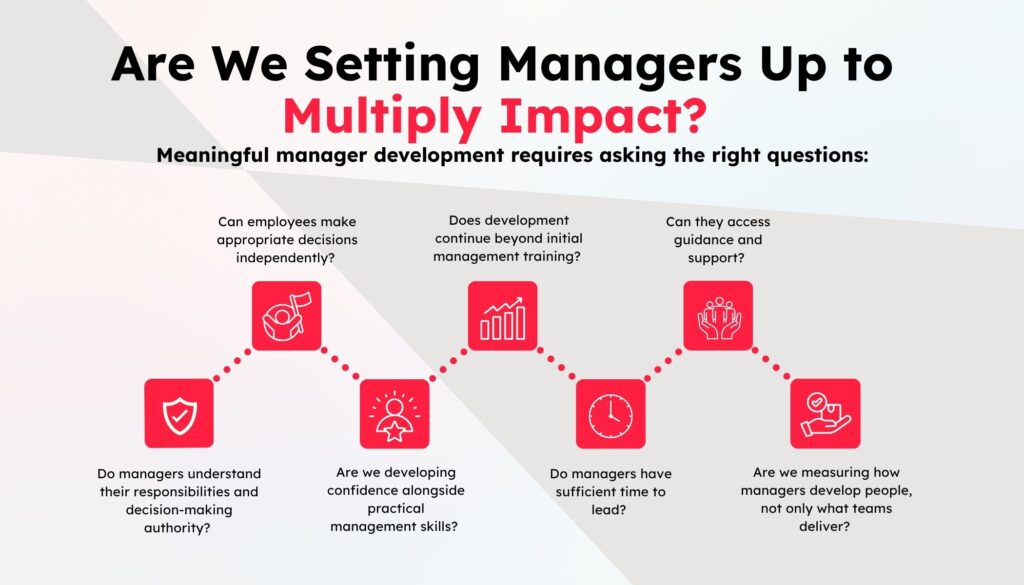
Are We Setting Managers Up to Multiply Impact?
Meaningful manager development requires asking the right questions:
- Do managers understand their responsibilities and decision-making authority?
- Can employees make appropriate decisions independently?
- Are we developing confidence alongside practical management skills?
- Does development continue beyond initial management training?
- Do managers have sufficient time to lead?
- Can they access guidance and support?
Are we measuring how managers develop people, not only what teams deliver?
These questions help identify obstacles and opportunities to strengthen leadership across the business.
Ultimately, are we building capable teams, or creating an environment where everything depends on the manager?
Manager Development Shapes More Than Manager Performance
Managers influence how employees experience trust, recognition, communication, development and workplace culture.
At Ruby Digital, our commitment to collaboration, growth and continuous learning challenges us to keep improving how we support our leaders.
Effective leadership development is not about expecting managers to have every answer. It is about giving them the confidence, clarity and support to help others succeed.
Great managers are not simply found. They are developed.
When managers have the tools, capacity and confidence to lead, they can move beyond being the person everyone depends on and become the person who empowers everyone around them to perform at their best.