 Skip to content

Why 2026 Demands a New Performance Marketing Playbook
Performance marketing is evolving faster than at any point in the last decade. AI advancement, the disappearance of third-party cookies, rising platform costs, and privacy-first infrastructure have reshaped the rules entirely.
The marketers who win in 2026 are not those relying on legacy tactics. They are building a modern performance marketing playbook powered by intelligent systems, advanced data, and continuous experimentation.
This guide explores the essential performance marketing tools, emerging performance marketing technology, and performance marketing trends that will separate leaders from laggards in 2026.
The State of Performance Marketing in 2026
Between 2024 and 2026, the industry experienced a structural transformation:
- Third-party cookie depreciation accelerated first-party data ecosystems
- AI automation moved beyond bidding into creative generation and predictive forecasting
- CPMs increased across major ad platforms
- Consumer journeys are fragmented across devices, marketplaces, retail media, and conversational interfaces
Mini‑stats shaping the landscape:
- CPMs increased year‑on‑year across major ad platforms.
- CTRs fluctuated widely due to AI‑driven creative saturation.
- First‑party data adoption rose across industries, supported by CRM‑integrated ad delivery.
The result? Performance teams must now be more technical, more data‑driven, and more adaptive, armed with a modern toolkit and a deeper understanding of privacy‑first measurement.
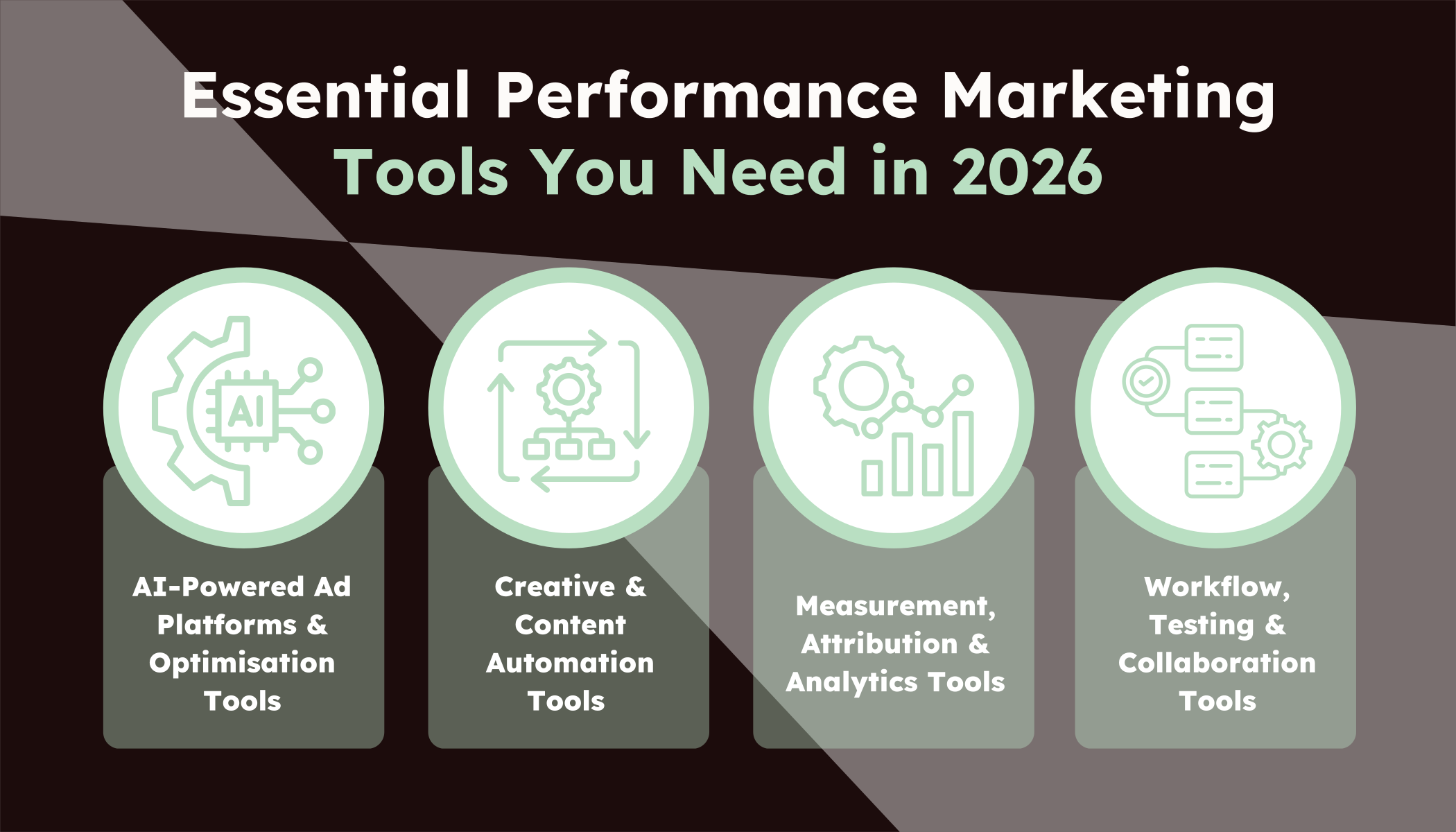
Essential Performance Marketing Tools You Need in 2026
Your tech stack determines your advantage. Below is the 2026 toolkit, shaped by automation, privacy shifts, and creative evolution, along with relevant Ruby Digital services that support these capabilities.
AI‑Powered Ad Platforms & Optimisation Tools
AI now forms the backbone of platform performance, delivering:
- Advanced Smart Bidding with real‑time intent detection
- Predictive budget allocation, shifting spend autonomously based on conversion probability
- Generative creative variants that test message, design, and audience fit automatically
Our supporting tool, RubyReports©, provides advanced analytics, unified dashboards, and automated reporting systems that eliminate blind spots and enable smarter decisions.
Creative & Content Automation Tools
Your creative engine determines how quickly you can test, scale, and personalise.
Essential components include:
- AI‑driven video creators for rapid ad production
- Dynamic Creative Optimisation (DCO) offering thousands of personalised variations
- Real‑time content personalisation tools that customise messaging based on user behaviour
Solutions such as RubyLeads© enable performance-ready funnel ecosystems designed to capture, qualify, and convert demand efficiently.
Measurement, Attribution & Analytics Tools
Future‑ready measurement requires:
- Privacy‑friendly attribution systems that don’t rely on cookies
- Server‑side tracking to combat signal loss
- Customer Data Platforms (CDPs) for unified audience management
- Call tracking technology to map offline conversions back to campaigns
Integrating services like Call Tracking helps bridge online campaigns with offline outcomes, strengthening ROI measurement and eliminating attribution gaps.
Workflow, Testing & Collaboration Tools
A modern performance team needs:
- A/B and multivariate testing platforms
- Creative versioning management for high‑volume ad production
- Performance dashboards tied to unified data systems
- Collaboration environments where creative, data, and strategy work in sync
Strategic services such as RubyLinks© support sustainable visibility and long-term performance growth. support sustainable visibility and long-term performance growth.
Core Performance Marketing Technology Shaping 2026
This is the infrastructure powering the new playbook.
AI & Machine Learning as the Central Engine
AI now powers:
- Smart bidding with real-time intent signals
- Predictive budget allocation
- Creative variation testing at scale
- LTV forecasting and churn modelling
Manual optimisation cannot keep pace with algorithmic speed. Human strategy directs. AI executes.
Privacy‑First Tracking & Data Infrastructure
Privacy regulation and signal loss require:
- Server-side tagging
- First-party data pipelines
- CRM-integrated ad delivery
- Secure data clean environments
Data integrity has become a competitive edge. Brands with structured, compliant, unified data ecosystems dominate performance efficiency.
Retail Media & Closed‑Loop Systems
Retail media continues explosive growth in 2026:
- Retailers provide rich, deterministic purchase data
- Closed‑loop systems deliver clearer attribution
- Brands gain more precise targeting than traditional broad‑reach platforms
Retail media is not experimental. It is foundational.
Marketing APIs & Integrations
The modern stack depends on:
- Unified data pipelines for real‑time insights
- API‑driven integrations across CRM, ad platforms, analytics, and product feeds
In 2026, integrations matter more than individual tools; your ecosystem is your edge.
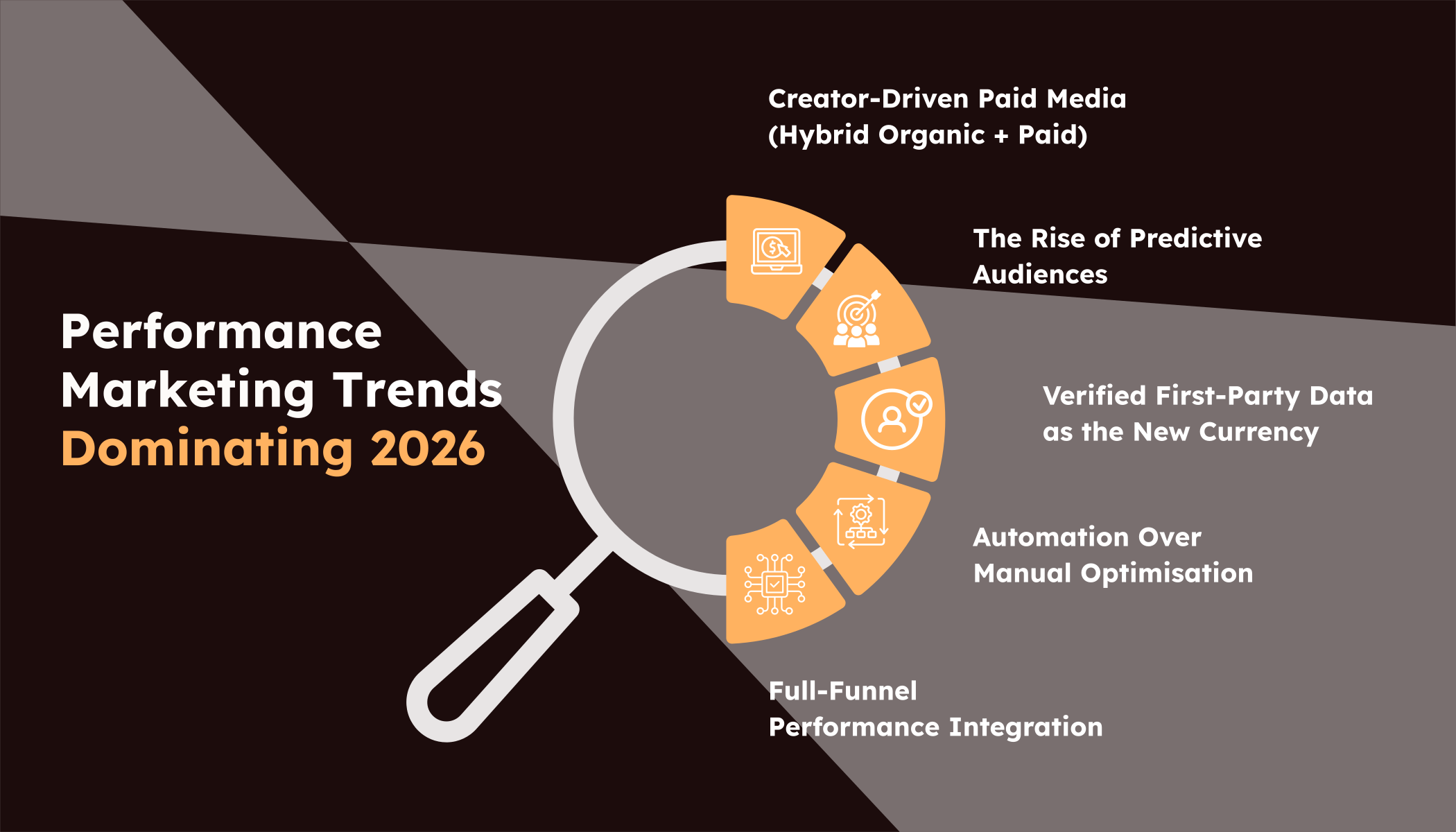
Performance Marketing Trends Dominating 2026
These are the performance marketing trends shaping tomorrow’s strategies.
Creator‑Driven Paid Media (Hybrid Organic + Paid)
2026 sees full integration of creators into performance frameworks:
- UGC‑powered ads
- Micro‑influencer amplification
- Rapid creative testing powered by AI
The Rise of Predictive Audiences
AI models now accurately predict:
- Conversion probability
- Churn risk
- LTV tiers
Budgets shift automatically to audiences with the highest predicted value.
Verified First‑Party Data as the New Currency
CRM integration is no longer optional:
- Brands build durable first‑party data ecosystems
- Audiences become more accurate
- Ad efficiency increases despite privacy restrictions
Automation Over Manual Optimisation
Platforms reduce manual control every year:
- Human operators shift to strategic oversight
- AI handles the execution
- Teams focus on the creative, insights, and experimentation
Full‑Funnel Performance Integration
2026 favours integrated, non‑siloed marketing:
- Paid search + paid social + content + CRO
- Consistent messaging across all touchpoints
- Continuous optimisation across the full customer lifecycle
How to Build Your 2026 Performance Marketing Playbook
Step 1: Audit Your Current Tools & Technology
Before building a future‑ready performance marketing playbook, you must first understand the strengths and weaknesses of your current ecosystem. The tools and technology you’ve accumulated over the past few years may no longer match the realities of 2026, whether due to privacy changes, advances in automation, or overlapping capabilities that create inefficiency.
Key actions during this audit include:
- Identify redundancies across your tech stack
- Evaluate outdated or unsupported tools
- Check compatibility with evolving privacy laws
- Assess the scalability of your systems
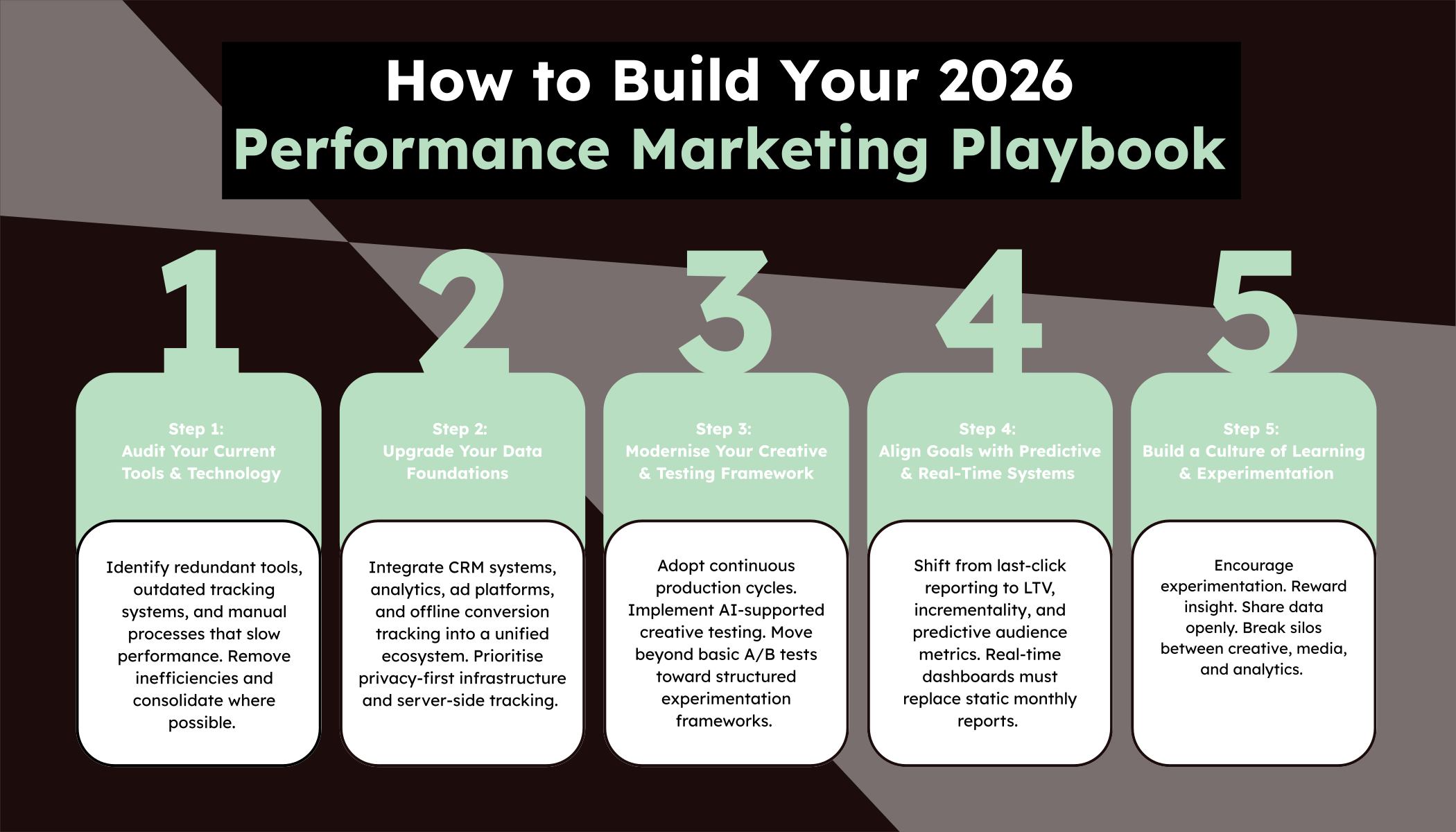
In short, identify redundant tools, outdated tracking systems, and manual processes that slow performance. Remove inefficiencies and consolidate where possible.
Step 2: Upgrade Your Data Foundations
In 2026, data isn’t just an asset; it’s the backbone of every high‑performing campaign. With third‑party cookies disappearing and signal loss increasing, brands need robust, secure, integrated first‑party data systems. Upgrading your data foundations ensures that your insights are reliable, your campaigns are efficient, and your attribution is accurate.
Key actions in strengthening your data foundations include:
- Building or refining first‑party data pipelines
- Consolidating platforms to reduce fragmentation
- Implementing privacy‑first tracking solutions
- Establishing unified identity resolution
In short, integrate CRM systems, analytics, ad platforms, and offline conversion tracking into a unified ecosystem. Prioritise privacy-first infrastructure and server-side tracking.
Step 3: Modernise Your Creative & Testing Framework
Creative is now one of the biggest performance drivers, especially in an algorithmic advertising world where platforms optimise delivery based on visual and messaging impact. In 2026, marketers must adopt production and testing frameworks that move at the speed of algorithms, not human timelines. This means generating more variations, learning faster, and adapting based on data rather than preference.
Key actions to modernise your creative workflow include:
- Shift toward continuous creative production, not sporadic bursts
- Implement automated testing systems powered by AI
- Use AI to scale creative variants rapidly
- Test aggressively and deliberately
- Ensure your design and content teams are integrated with performance
In short, adopt continuous production cycles. Implement AI-supported creative testing. Move beyond basic A/B tests toward structured experimentation frameworks.
Step 4: Align Goals with Predictive & Real‑Time Systems
The days of static monthly reporting are over. By 2026, success depends on real‑time responsiveness and forward‑looking metrics powered by machine learning. Performance marketers must set KPIs aligned with predictive models, incrementality, and lifetime value rather than isolated last‑click conversions.
Key actions include:
- Define KPIs that match modern performance realities
- Integrate predictive analytics into forecasting and planning
- Adopt real‑time measurement dashboards
- Ensure goals align with automated bidding systems
- Create feedback loops between creative, media, and analytics
In short, shift from last-click reporting to LTV, incrementality, and predictive audience metrics. Real-time dashboards must replace static monthly reports.
Step 5: Build a Culture of Learning & Experimentation
The best performance teams in 2026 aren’t the ones with the biggest budgets; they’re the ones who learn the fastest. With constant platform changes and new ad formats emerging weekly, marketers must foster a culture that values experimentation, curiosity, and data literacy. Growth comes from teams that test, adapt, and evolve continuously.
Key actions for building this culture include:
- Encourage frequent, low-stakes experiments
- Promote data literacy across all departments
- Share insights openly and regularly
- Reward curiosity and innovative thinking
- Break down silos between teams
In short, encourage experimentation. Reward insight. Share data openly. Break silos between creative, media, and analytics.
The Winning Edge for 2026
In 2026:
- Performance marketing tools enable scale
- Performance marketing technology strengthens measurement and automation
- Performance marketing trends reveal emerging opportunity
- Adaptability becomes the ultimate advantage
The brands that modernise early will lead. Those who hesitate will struggle to compete in an increasingly automated, data-driven ecosystem.
The future belongs to marketers who embrace intelligence, precision, and relentless optimisation.
Now is the time to build your 2026 performance marketing playbook.