 Skip to content

The internet has become a truly global marketplace. Today, people search, browse, and engage with content in hundreds of different languages. While English remains influential in many regions, most internet users prefer consuming content in their native language.
For businesses, this creates a significant opportunity, but also a challenge. Companies operating in a single language limit their organic visibility, restrict their reach, and leave valuable revenue opportunities untapped.
Traditionally, multilingual SEO has been difficult to scale. It required manual translation, localisation expertise, and considerable time and financial investment. As a result, many businesses either avoid multilingual strategies altogether or implement them inconsistently.
AI has transformed this landscape. It provides a scalable and efficient way to expand into new markets, turning multilingual SEO from a resource-intensive initiative into a competitive advantage.
How Does AI-Powered SEO Unlock Global Growth?
AI-powered SEO unlocks multilingual market opportunities by enabling businesses to translate, localise, and optimise content at scale while preserving search intent, contextual relevance, and organic performance across languages and regions.
This shift is transformative. AI not only reduces the time and cost associated with global expansion, but it also helps maintain the contextual accuracy required for SEO success. Content can be adapted to align with how audiences search, think, and engage in different markets.
The rest of this article explores why this approach works and how businesses can implement it effectively.
Why Multilingual SEO Traditionally Struggled
Before AI, multilingual SEO presented several significant challenges.
Manual translation was slow, expensive, and difficult to scale. Many businesses relied on direct translations that converted words rather than meaning. The result was content that was technically correct but disconnected from local search behaviour.
One of the biggest challenges is that keywords rarely translate directly across languages. A high-volume keyword in English may have a completely different phrasing or intent in another market. Without localisation, content struggles to align with how users actually search.
Cultural nuance adds another layer of complexity. Tone, messaging, and terminology must resonate with local audiences. Without localisation, content often feels generic, leading to lower engagement and weaker rankings.
As a result, many organisations attempted to scale globally without scaling their content strategy. This is precisely the gap AI is helping to close.
How AI Is Transforming Multilingual SEO
AI has introduced a new level of sophistication to multilingual SEO. Rather than simply translating content, it focuses on meaning, context, and user intent.
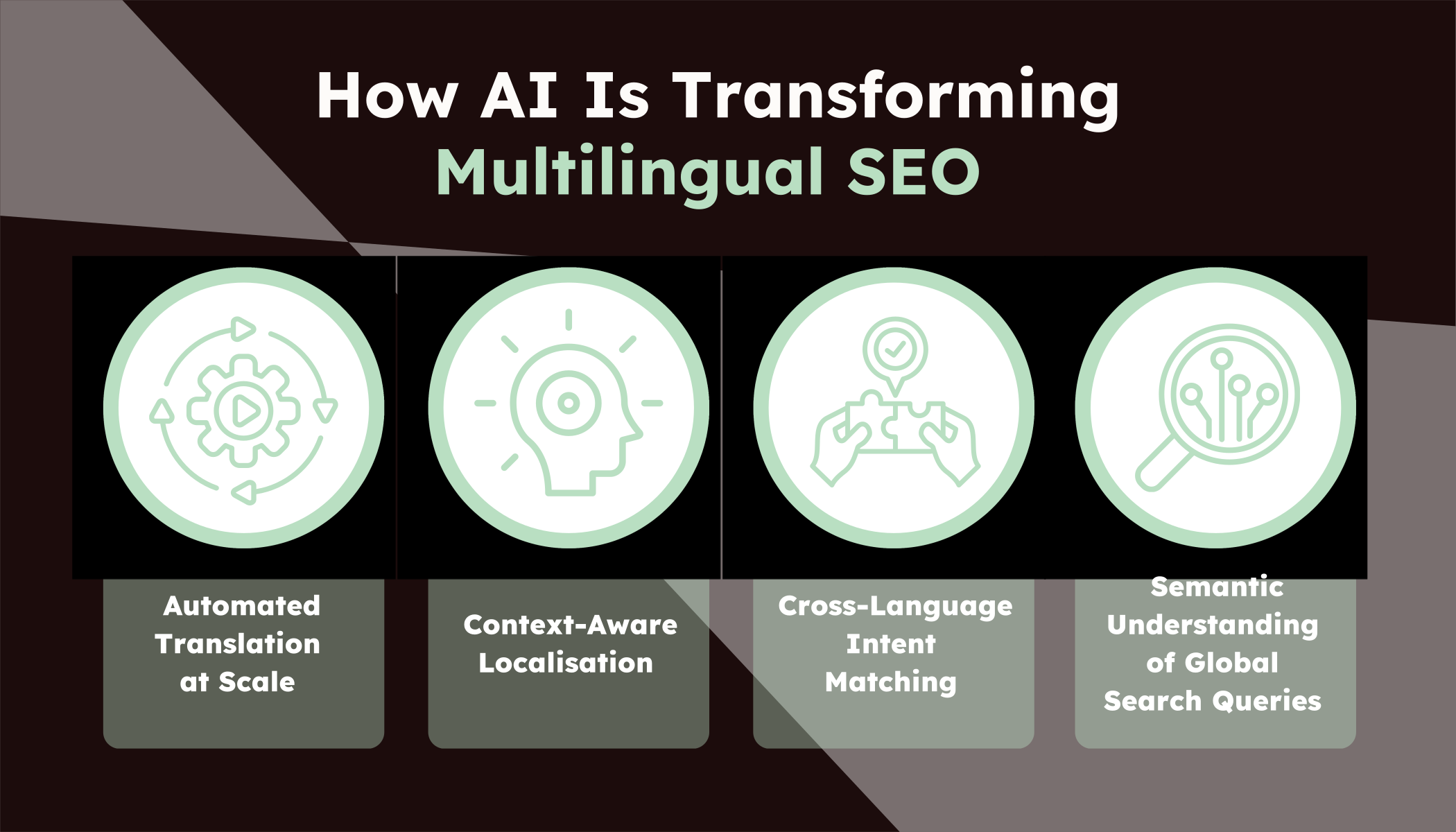
AI-driven SEO enables:
- Automated translation at scale
- Context-aware localisation
- Cross-language intent matching
- Semantic understanding of global search queries
Unlike traditional translation tools, AI interprets meaning rather than merely converting words. It analyses how users search in different regions, identifies language patterns, and adapts content accordingly.
This closely aligns with how modern search engines operate. Platforms like Google increasingly prioritise relevance, user intent, and satisfaction over exact keyword matching. AI supports these factors simultaneously, making it a powerful tool for improving global search visibility.
For organisations looking to expand internationally, using AI for SEO multilingual sites can significantly accelerate growth while maintaining quality and consistency.
For businesses exploring advanced strategies, services like AI SEO and GEO services and Search Engine Optimisation provide practical frameworks for scaling AI-driven SEO efforts.
The Critical Role of Human Review in AI-Driven Localisation
While AI makes multilingual SEO scalable, human oversight remains essential.
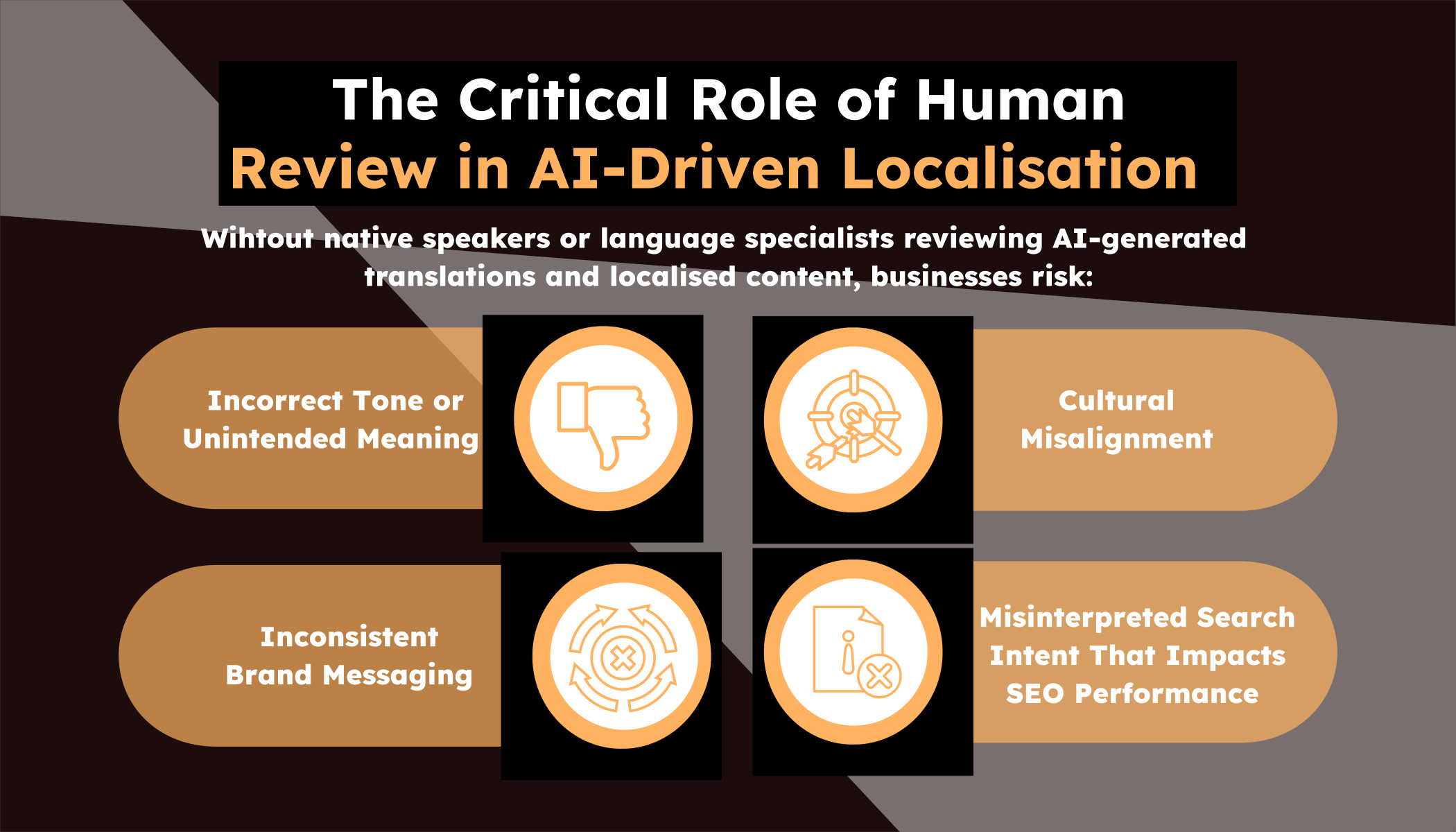
Native speakers or language specialists should always review AI-generated translations and localised content. Without this step, businesses risk:
- Incorrect tone or unintended meaning
- Cultural misalignment
- Inconsistent brand messaging
- Misinterpreted search intent that impacts SEO performance
Human expertise ensures content remains authentic, accurate, and aligned with both audience expectations and brand positioning.
In short, AI provides scale. Humans provide quality.
The most effective multilingual SEO strategies combine both.
AI-Driven Translation vs Localisation: Why It Matters
One of the most important distinctions in multilingual SEO is the difference between translation and localisation.
Translation converts content from one language into another.
Localisation adapts meaning, tone, terminology, and context to suit a specific audience.
Modern AI tools are increasingly capable of bridging this gap. They can identify regional language differences and adapt content accordingly.
For example:
- The same product may be described differently in the UK and the US.
- Certain phrases resonate only in specific regions.
- Search behaviour varies across countries, even when the language is shared.
By accounting for these differences, AI helps create content that feels natural and relevant to local audiences.
The result is stronger engagement, improved search performance, and a better user experience.
How AI Improves Search Performance Across Languages
AI strengthens multilingual SEO by aligning content with the factors search engines use to evaluate quality and relevance.
It helps businesses:
- Match content to local keyword intent
- Build topic clusters across multiple languages
- Optimise on-page structures for international indexing
- Create region-specific content variations
Search engines increasingly reward contextual relevance and user satisfaction. AI supports both by ensuring content is technically optimised and culturally relevant.
However, maintaining performance still requires human review. Language specialists and local market experts help preserve accuracy, trust, and brand integrity across markets.
For deeper insights into how AI is reshaping search visibility, explore this guide on ranking in ChatGPT and other LLMs.
Common Mistakes Businesses Make with AI Multilingual SEO
Despite its potential, many businesses misuse AI in multilingual SEO.
Common mistakes include:
- Relying on direct translation without localisation
- Ignoring regional search behaviour
- Publishing AI-generated content without review
- Using inconsistent terminology across markets
- Treating global SEO as duplication rather than adaptation
One of the most damaging mistakes is publishing unreviewed AI content. This often leads to inaccurate translations, poor contextual relevance, and weaker SEO performance.
AI is a powerful tool, but it must be implemented strategically.
How Website Structure and Tools Like WPML Support Multilingual SEO
Effective multilingual SEO goes beyond content; it requires a strong technical foundation.
Search engines need clear signals to understand:
- Which language a page is written in
- Which audience it targets
This is typically achieved through structured site architecture, such as:
- Subdirectories (e.g. domain.com/en/, domain.com/fr/)
- Subdomains (e.g. fr.domain.com)
- Country-specific domains
Among these, subdirectories are often preferred because they consolidate domain authority while still providing clear language targeting.
Where WPML Fits In
WPML helps businesses manage multilingual websites efficiently by:
- Creating structured multilingual URLs
- Managing multiple language versions of content
- Implementing hreflang tags
- Maintaining consistency across translations
This allows organisations to scale AI-assisted content while maintaining strong technical SEO practices.
Why Structure & AI Must Work Together
AI handles content creation and localisation. Tools like WPML support the technical implementation.
Together they provide:
- Accurate language targeting
- Clear indexing signals
- Consistent site architecture
- Better international SEO performance
Without the right technical structure, even excellent content may struggle to perform.
The Competitive Advantage of AI-Powered Global SEO
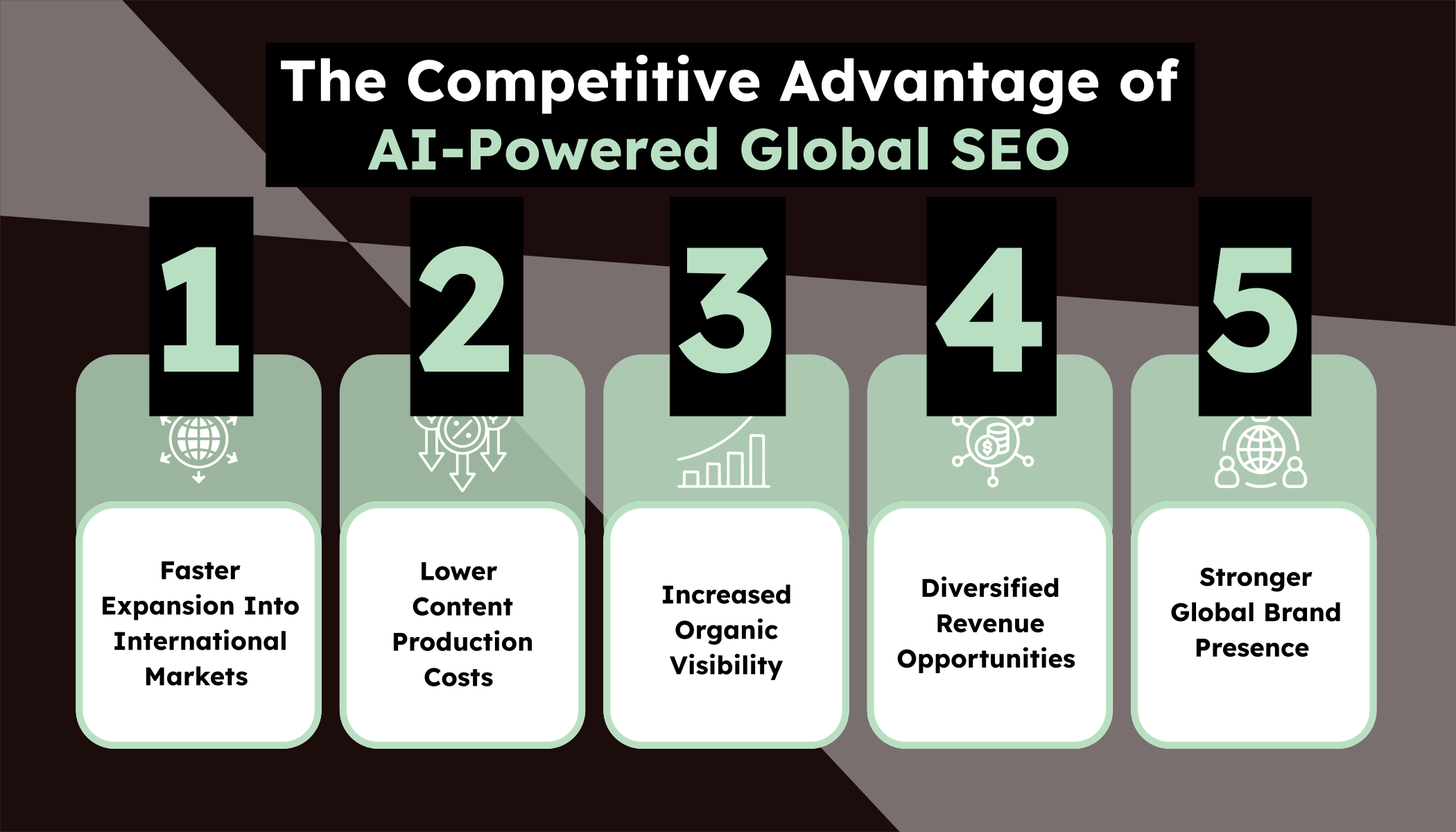
Businesses adopting AI-driven multilingual SEO gain several advantages:
- Faster expansion into international markets
- Lower content production costs
- Increased organic visibility
- Diversified revenue opportunities
- Stronger global brand presence
Early adopters are already benefiting from these advantages, reaching audiences that competitors have yet to engage.
As global competition increases, AI-powered SEO is rapidly becoming a necessity rather than a luxury.
The Future of SEO Is Multilingual & AI-Driven
The future of search is increasingly global, intelligent, and intent-driven.
AI will continue advancing content creation, localisation, and optimisation capabilities. At the same time, search engines will place even greater emphasis on context, relevance, and user intent.
Businesses investing in multilingual SEO today will be better positioned to lead tomorrow’s search landscape.
The core message is simple:
AI-powered SEO enables organisations to scale globally without sacrificing quality, relevance, or performance.
Ultimately, success comes down to connection. When your content speaks your audience’s language, both literally and contextually, search engines reward it, and users engage with it.