 Skip to content

Many businesses promote an open-door policy, encouraging employees to ask questions, share ideas, and raise concerns. While this creates accessibility, access to leadership is not the same as access to information.
Employees are often expected to deliver results without understanding the bigger picture. They may know what needs to be done but lack visibility into business performance, strategic priorities, or the reasoning behind key decisions.
These information gaps can slow execution, weaken accountability, and reduce engagement.
High-performing organisations take a different approach. They embrace company transparency by giving employees the context they need to make informed decisions and contribute with confidence.
Transparency is more than a cultural value. It has become a competitive advantage because it strengthens trust, aligns teams, and improves organisational performance. When people understand where the business is heading and how their work contributes to its success, they are better equipped to drive meaningful results.
What Is Radical Transparency in the Workplace?
Radical transparency is the practice of openly sharing business priorities, performance, decision-making processes, and relevant operational information to improve alignment, accountability, and trust.
The goal is not to share everything. It is to provide employees with enough context to understand the business, make better decisions, and see how their work supports broader objectives.
When teams understand the bigger picture, they are more likely to take ownership, collaborate effectively, and focus on outcomes rather than simply completing tasks.
Why Traditional Communication Models Often Fall Short
Many organisations still rely on a need-to-know approach, where important information remains within leadership teams until decisions have already been made.
While this may seem efficient, it often creates confusion and disconnect.
Without context:
- Decisions appear arbitrary.
- Priorities become unclear.
- Teams work in silos.
- Accountability decreases.
Employees naturally become task-focused instead of outcome-focused because they cannot see how their work contributes to the organisation’s success.
The result is lower engagement, duplicated effort, slower decision-making, and missed opportunities for collaboration.
People are far more likely to take ownership when they understand both the destination and the reason behind the journey.
What Radical Transparency Actually Looks Like
A common misconception is that radical transparency means sharing every piece of information with every employee.
In reality, effective transparency is intentional.
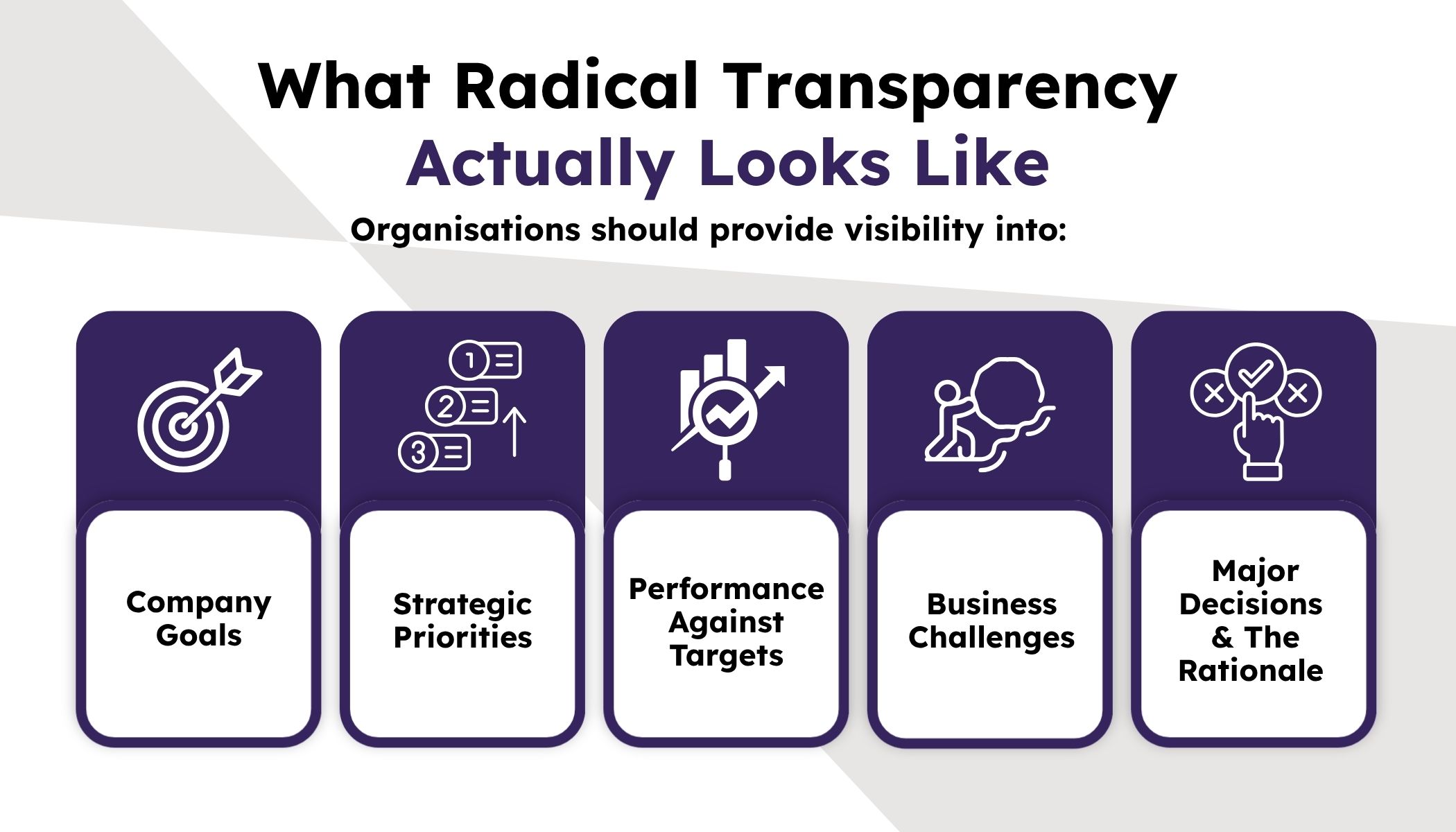
Organisations should provide visibility into:
- Company goals
- Strategic priorities
- Performance against targets
- Business challenges
- Major decisions and the reasoning behind them
This approach gives employees the knowledge they need to make better decisions without overwhelming them with unnecessary information.
When transparency is structured, relevant, and consistent, it empowers people to act with confidence, align their efforts with business objectives, and contribute to stronger organisational performance.
How Transparency Builds Trust
Trust is one of an organisation’s greatest assets, but it is earned through consistent actions rather than good intentions.
Employees are more likely to trust leadership when information is shared openly, and decisions are explained clearly. Understanding the reasoning behind strategic choices helps people support change, even when the outcome is challenging.
Greater company transparency also reduces:
- Speculation
- Workplace rumours
- Misunderstandings
- Assumptions
When employees have access to accurate information, they feel included rather than excluded. This creates psychological safety, encourages open communication, and strengthens confidence in leadership.
People trust what they can see and understand. Transparency turns communication into credibility.
How Transparency Creates Ownership & Accountability
Transparency also strengthens accountability by making expectations clear.
When employees understand business priorities, performance targets, and how their work contributes to organisational success, they are more likely to take ownership of outcomes instead of simply completing tasks.
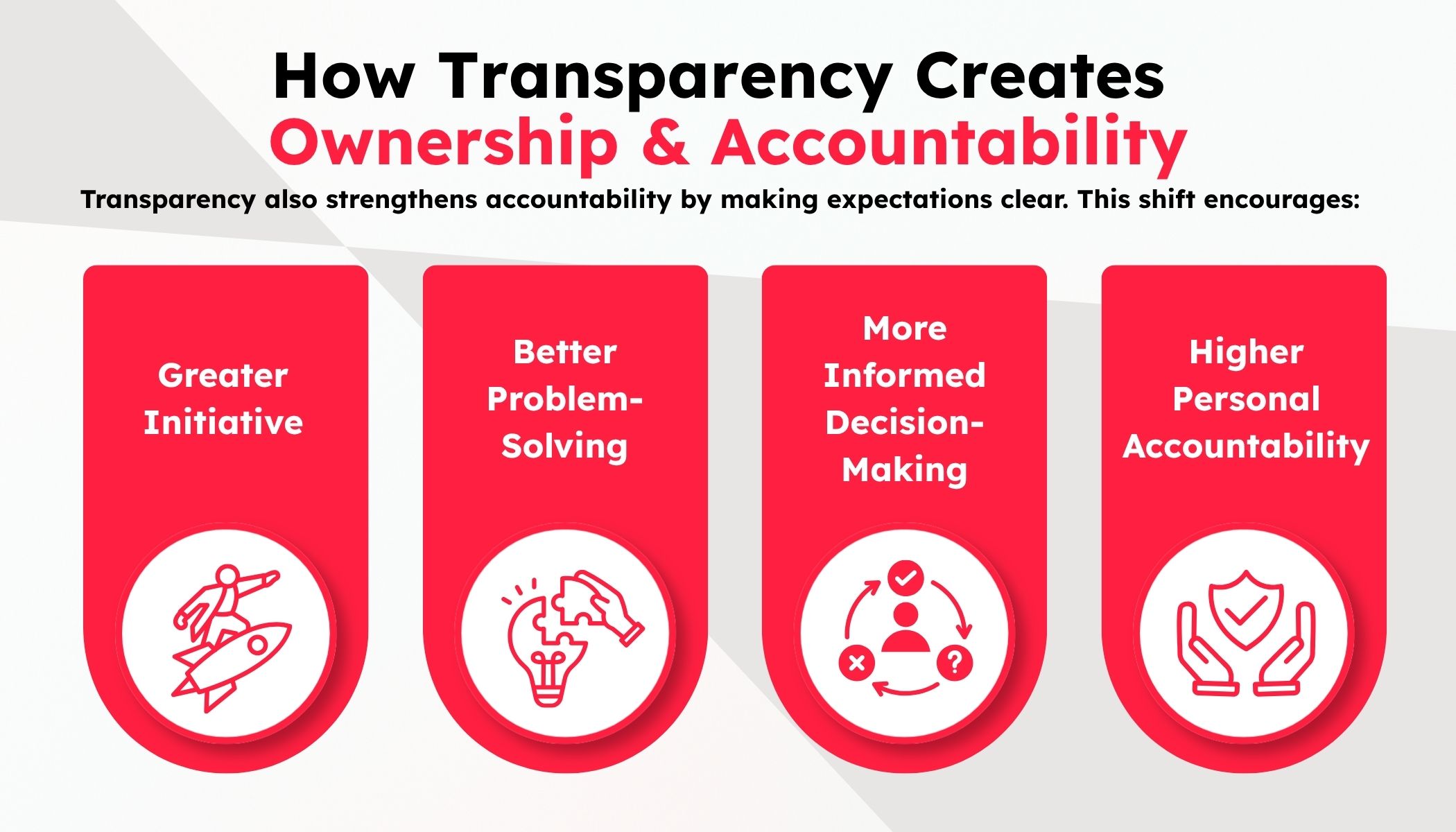
This shift encourages:
- Greater initiative
- Better problem-solving
- More informed decision-making
- Higher personal accountability
Visibility gives people the confidence to act because they understand what success looks like and how their contribution influences business performance.
How Transparency Accelerates Decision-Making & Problem-Solving
One of the most practical benefits of radical transparency is speed.
When important information is restricted to management, teams often wait for approvals or clarification before taking action. This slows execution and creates unnecessary bottlenecks.
Transparent organisations equip employees with the context they need to make informed decisions.
As a result:
- Decisions happen faster.
- Problems are identified earlier.
- Collaboration improves.
- Escalations decrease.
By reducing uncertainty, transparency enables teams to respond more quickly and solve challenges with greater confidence.
Why Sharing Performance Metrics Changes Behaviour
People perform better when they can measure progress.
Providing visibility into key performance indicators helps employees understand where the business is heading and how their efforts contribute to success.
Useful metrics may include:
- Revenue targets
- Client satisfaction scores
- Project delivery KPIs
- Operational performance measures
Regular feedback allows employees to identify opportunities for improvement, celebrate progress, and adjust their approach when needed.
Rather than working from assumptions, teams can make decisions using real business data.
The Role of Financial Transparency in Modern Businesses
Financial performance is often viewed as sensitive information, yet sharing appropriate financial context can strengthen decision-making across the organisation.
Employees do not need access to confidential details. They do benefit from understanding growth objectives, budget priorities, profitability goals, and the commercial factors influencing business decisions.
This level of visibility helps people prioritise more effectively, align their efforts with organisational goals, and make decisions that support long-term success.
Common Concerns About Radical Transparency
Some leaders worry that greater openness could overwhelm employees or expose sensitive information.
Successful radical transparency does not mean sharing everything. It means sharing the right information, at the right time, with clear purpose and appropriate boundaries.
When transparency is intentional and well managed, it reduces uncertainty, strengthens trust, and creates a more engaged and accountable workforce.
How High-Transparency Organisations Operate Differently
Any transparent organisation recognises that informed employees make better decisions. Rather than limiting information to leadership, they consistently provide the context teams need to stay aligned and perform at their best.
High-transparency organisations typically:
- Communicate priorities regularly
- Share business performance openly
- Explain the reasoning behind key decisions
- Encourage constructive feedback
- Involve employees in solving challenges
This approach creates more than informed employees. It creates aligned teams that understand the organisation’s direction and can confidently contribute to shared goals.
As a result, businesses often experience:
- Higher engagement
- Faster execution
- Stronger accountability
- Better collaboration
When people understand both the destination and their role in reaching it, they are more likely to take ownership and deliver meaningful results.
How Ruby Digital Embraces Transparency
At Ruby Digital, radical transparency is viewed as a practical driver of performance, collaboration, and growth.
The business believes that employees make better decisions when they understand company priorities, strategic objectives, and performance expectations. By sharing this context, teams are empowered to work with greater confidence and accountability.
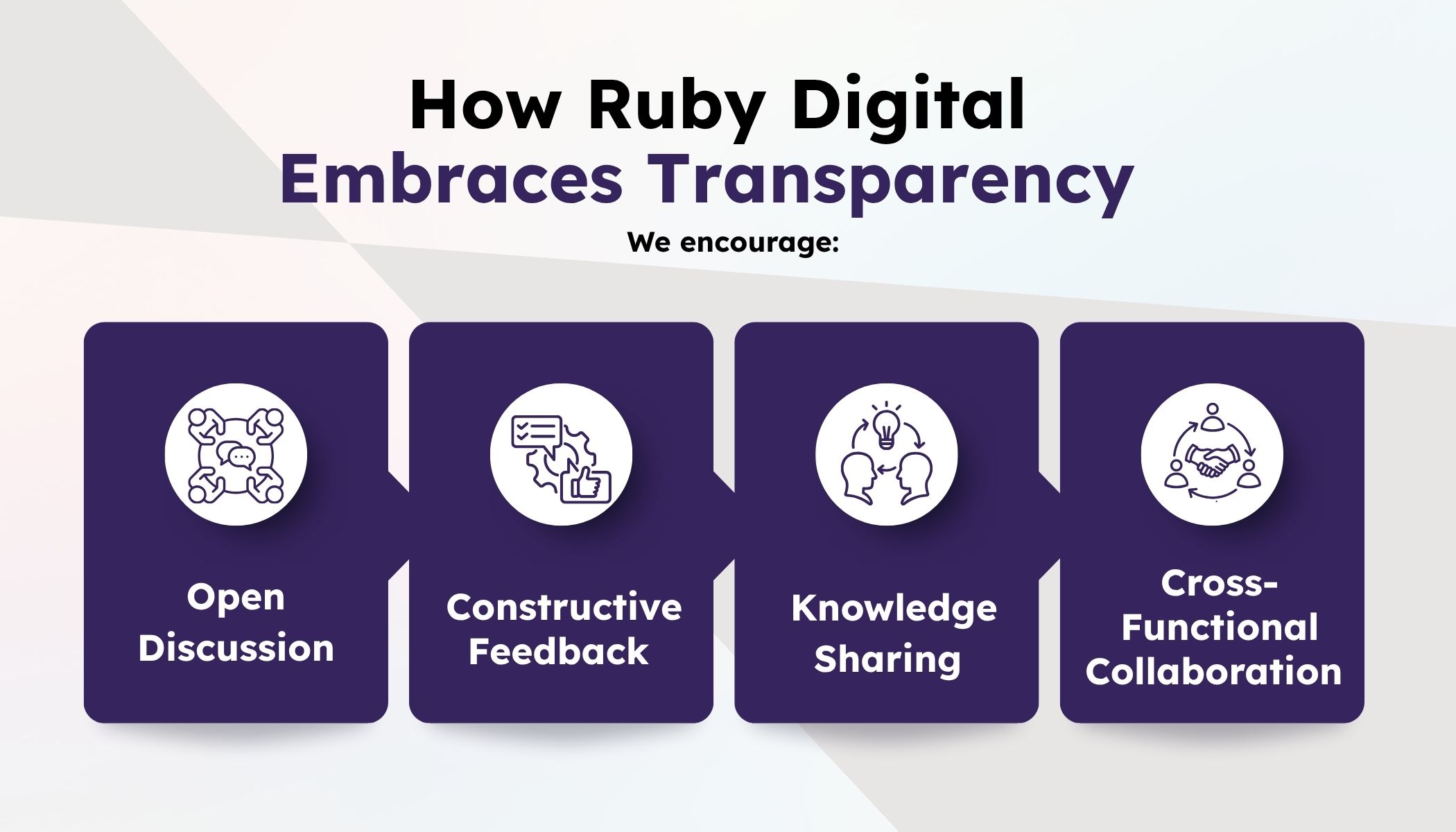
Ruby Digital encourages:
- Open discussion
- Constructive feedback
- Knowledge sharing
- Cross-functional collaboration
This commitment to transparency aligns closely with the people-first culture explored in Ruby Digital’s Culture Wins: A People-First Revolution.
It also complements the collaborative environment discussed in What Innovation Looks Like in a Fully Remote Company and the leadership principles shared in Leadership Lessons from Ruby Digital.
Ruby Digital uses transparency as a tool for empowerment, not control.
The Future of Leadership Is More Transparent
Employee expectations continue to evolve.
Modern workplaces, particularly hybrid and remote environments, require greater trust, stronger communication, and more visibility into how organisations operate.
Businesses that embrace company transparency are better positioned to improve:
- Employee engagement
- Talent attraction
- Talent retention
- Organisational agility
Leaders who provide context instead of simply giving instructions enable employees to think strategically, solve problems proactively, and contribute more effectively to organisational success.
Transparency is no longer just a cultural initiative. It is becoming a defining characteristic of high-performing businesses.
Transparency Is a Performance Strategy
At its core, radical transparency is a performance strategy that strengthens trust, accountability, and performance.
When organisations openly share priorities, progress, performance, and the reasoning behind important decisions, employees gain the clarity they need to make better decisions and take greater ownership of their work.
An open-door policy remains valuable, but true transparency goes further. It gives employees meaningful insight into the business so they can align their actions with organisational goals and drive measurable results.
The organisations that achieve sustainable growth are not those that protect information most closely. They are the ones that empower their people with the knowledge, context, and confidence to make smarter decisions every day.
In today’s business environment, transparency is more than good leadership. It is a competitive advantage that builds trust, accelerates performance, and positions organisations for long-term success.